
Skin Cancer Treatment
Skin cancers are among the most common forms of cancer. This pathology requires timely detection and comprehensive treatment, as early diagnosis increases the chances of a full recovery.
Modern medicine offers a wide range of methods that allow for effective treatment even in complex cases. At the K+31 Medical Center (Moscow), diagnosis and treatment are based on international clinical standards and a personalized approach to each patient.

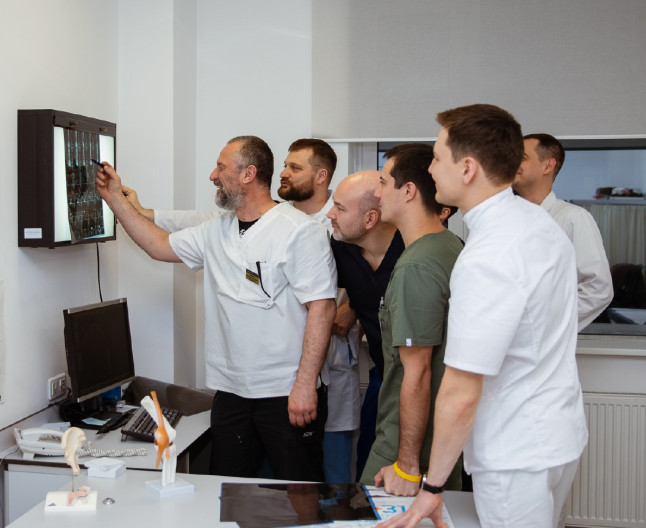
specialists

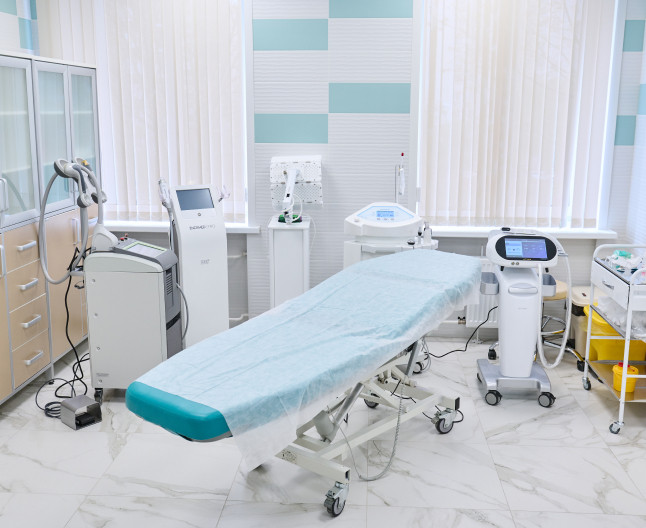
equipment

treatment



Classification
Basal cell
Basal cell carcinoma is the most common type of skin cancer, most often appearing on exposed areas such as the face, neck, and ears. It can appear as a shiny nodule, a pink spot, or a non-healing ulcer.
It is characterized by slow growth and extremely rare metastasis. However, basal cell carcinoma can destroy adjacent tissue if left untreated.
Squamous cell
This is a more aggressive type of tumor, developing from the cells of the superficial layer. Unlike basal cell carcinoma, this type more often spreads to the lymph nodes and can metastasize to internal organs.
Appearances vary: a dense nodule, an ulcer with jagged edges, or a wart-like growth. Squamous cell carcinoma most often occurs in areas exposed to prolonged ultraviolet rays or chronic inflammation.
Melanoma
One of the most dangerous forms develops from melanocytes—the cells responsible for producing the pigment melanin.
The main signs of melanoma:
- Changes in the shape, color, or size of the mole
- Asymmetry, jagged edges, itching, and bleeding
- Rapid enlargement of the pigmented spot
Even in the early stages, melanoma is prone to aggressive metastasis, affecting the lymph nodes, lungs, liver, and brain. Every week of delay reduces the chances of success.
Merkel cell tumors
This rare but extremely aggressive malignancy originates in specialized neuroendocrine cells. It is more common in older adults and patients with weakened immune systems.
A Merkel cell tumor appears as a firm, painless, red or purple nodule that can rapidly enlarge. The disease is characterized by early metastasis.
Metatypic
This type occupies an intermediate position between basal cell and squamous cell types. It is less common, but has an unpredictable course.
It can present as a nodule or ulcer, gradually increasing in size. Unlike pure basal cell carcinoma, it is more likely to metastasize, but with timely, qualified treatment, the prognosis remains favorable.
Important! Correctly determining the type plays a key role in choosing a treatment strategy. Therefore, diagnosis and consultation with an experienced physician are essential for every patient diagnosed with a suspicious neoplasm.
Skin cancer diagnosis
A thorough examination is a key step in establishing an accurate diagnosis and choosing the optimal treatment approach. K+31 Medical Center uses modern equipment that allows us to detect tumors even in the early stages of development.
Skin cancer diagnosis involves several stages:
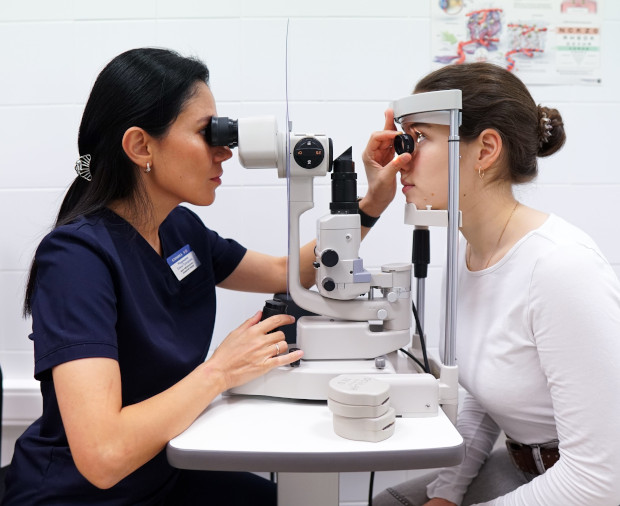
- A doctor's examination to assess the tumor's appearance, shape, color, and structure.
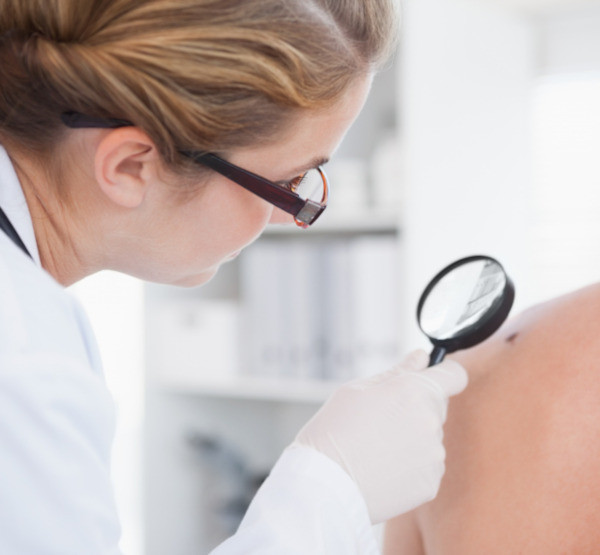
- Dermatoscopy. Using a special instrument called a dermatoscope, the doctor examines the tumor under high magnification.
- A biopsy is the primary method for confirming the diagnosis. The skin area with the suspicious change is excised and then sent to a laboratory for histological examination to determine the cell type and whether it is malignant.
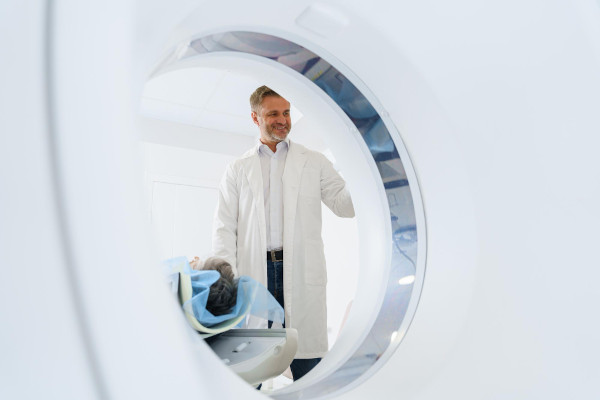
- CT, MRI, and PET-CT are used to assess the depth of the lesion and detect metastases.
- Laboratory tests. Blood tests, including tumor markers, are often prescribed to determine the stage and activity of the disease.
No single method provides a complete picture. It is the combination of a clinical examination, biopsy, and instrumental examination that allows the doctor to accurately assess the pathology.
Diagnostics are tailored to each individual case. The physician's experience and modern equipment at the K+31 clinic guarantee an accurate diagnosis, which determines the success of subsequent medical interventions.
- Diagnostic Features of Different Types of Cancer Different clinical cases require specific approaches.
- Basal Cell Usually detected by dermatoscopy and confirmed by biopsy. Metastases are rare, so the focus is on the local process.
- Squamous Cell Checking of nearby lymph nodes is mandatory.
- Melanoma In addition to biopsy, lymph node ultrasound and PET-CT may be performed.
- Merkel Cell Tumor Diagnosis is always comprehensive, including immunohistochemical studies.
- Metatypic Requires careful morphological analysis to accurately determine the nature of the pathological element.
Stages of skin cancer
The stage of the disease determines how deeply the pathology has penetrated the tissue and whether it has spread to other structures. The doctor determines the depth and extent of the pathological process after an examination, biopsy, and additional tests (CT, MRI, PET-CT).
Medical classification distinguishes several stages:
- 0 (carcinoma in situ). Cancer cells are present only in the superficial layer. This is the earliest stage, at which treatment is almost always completely curative.
- 1. A small element (up to 2 cm), limited to the skin and does not affect the lymph nodes. With timely surgery, the prognosis is favorable.
- 2. The size exceeds 2 cm or it shows signs of more aggressive growth, but there are no metastases yet.
- 3. The tumor grows deeper, can affect muscle or cartilage, and spread metastases to nearby lymph nodes.
- 4. The tumor reaches significant size, affecting distant organs (lungs, liver, bones, brain).
Important! Even in the late stages of the disease, modern treatments can prolong life, reduce the severity of symptoms, and improve quality of life.
Skin cancer treatment
The choice of treatment depends on the stage of the disease, its type, and the patient's overall condition. The earlier the diagnosis, the higher the chances of a complete cure.
The K+31 Medical Center uses a personalized approach: doctors carefully analyze the clinical picture, selecting the optimal combination.
Surgery
Surgery is one of the main treatment methods. The tumor is removed along with a small area of surrounding healthy tissue to eliminate the risk of recurrence. K+31 Clinic uses modern technologies to minimize surgical trauma and preserve the aesthetic result.
Advantages of surgery for oncology:
- Radical removal
- Ability to control excision margins
- Low risk of recurrence in early stages
- Use of reconstructive techniques to restore appearance
Thanks to the use of epidural anesthesia, patients with chronic heart, kidney, and lung diseases, as well as the elderly, can safely undergo surgery.
Radiation Therapy
Radiation Therapy
Radiation therapy is used when surgery is impossible or undesirable. Using linear accelerators, radiation is directed precisely to the affected area, sparing healthy tissue.
This method is suitable for treating squamous cell tumors, Merkel cell tumors, and as a post-operative adjunct.
Chemotherapy
Special drug therapy is prescribed when the pathology extends beyond the skin layer, spreading to the lymph nodes or internal organs.
The goal of treatment is to stop the growth of malignant cells, reduce the size of the tumor, and prevent the spread of the process.
Targeted Therapy
This approach involves targeting the molecules responsible for tumor growth. Unlike chemotherapy, the drugs act precisely, damaging cancer cells.
This therapeutic approach is used for melanoma and other aggressive forms of cancer, significantly slowing the process. Targeted therapy can be administered alone or in combination with other methods, enhancing their effectiveness.
Cryosurgery
Cryosurgery
Cryosurgery involves applying liquid nitrogen to the tumor. The low temperature freezes and destroys tumor cells, causing the wound to gradually heal.
Cryosurgery is effective for small basal cell carcinomas, superficial forms, and early stages of the disease. This method is minimally invasive.
Laser Therapy
Laser is used to remove small, superficial lesions. The beam acts precisely, removing abnormal cells with minimal damage to surrounding structures.
Hardware laser therapy is especially useful for treating tumor-like lesions on the face and other exposed areas where cosmetic results are important. Laser is also used as an adjunct to surgery.
General information
Causes of Development
Skin cancer does not occur suddenly. It is the result of accumulated damage to cellular structures due to external and internal pathogenic factors. Over time, these changes can lead to the cell losing control of division. From this point on, the oncological process begins.
The main risk factors include:
- Ultraviolet radiation. Excessive sun exposure, including in tanning beds, is the leading cause. Sunburns are especially dangerous in childhood and adolescence, when the skin is more vulnerable.
- Fair skin phototype. People with fair skin, blue eyes, and red or blond hair have less natural protection against ultraviolet radiation, so their risk is higher.
- Hereditary predisposition. If there is a history of cancer in the family, the risk of developing it in immediate relatives increases.
- Age. The skin of older people has accumulated a large amount of damage, so cancer most often develops after age 60.
- Immune disorders. People with a weakened immune system (for example, after an organ transplant or with chronic diseases) are more vulnerable to developing malignancies.
- Exposure to carcinogens. Direct contact with chemicals (arsenic, petroleum products) increases the risk.
- Chronic inflammation, scars, long-term non-healing burn ulcers, old injuries.
- Ionizing radiation. High levels of radiation and frequent medical exposures can damage cellular DNA.
The presence of risk factors does not necessarily mean that cancer will develop. But understanding the causes helps take preventative measures in a timely manner.


Bibliography:
- Lamotkin I. A. Clinical Dermato-Oncology. Moscow: BINOM. Laboratory of Knowledge, 2013. 499 p.
- Cherenkov V. G. Clinical Oncology. Moscow: MK, 2010. 434 p.
- Chissov V. I. Oncology. Moscow: GEOTAR-Media, 2007. 560 p.
- Gilyazutdinov I. A., Khasanov R. Sh., Safin I. R., Moiseev V. N. Malignant Tumors of Soft Tissue and Skin Melanoma. — Moscow: Practical Medicine, 2010. — 204 p.
- Polyakov A. P., Gevorkov A. R., Stepanova A. A. Modern strategy for the diagnosis and treatment of squamous cell skin cancer // Tumors of the head and neck. - 2021. - Vol. 11. - No. 1. - Pp. 51-72.
- Utyashev I. A. et al. Malignant non-melanocytic tumors of the skin (basal cell carcinoma, squamous cell carcinoma, Merkel cell carcinoma) // Malignant tumors. - 2023. - Vol. 13. - No. 3s2-1. – P. 311-334.
- Kubanov A. A. et al. Current understanding of the pathogenesis of basal cell skin cancer // Bulletin of dermatology and venereology. – 2021. – Vol. 97. – No. 5. – P. 38-51.
- Ignatova A. V. Actual problems of treatment of locally advanced and metastatic squamous cell skin cancer // Modern oncology. – 2021. – Vol. 23. – No. 1. – P. 94-98.
- Gevorkov A. R. et al. Radiation therapy of squamous cell skin cancer: current standards and future prospects // Tumors of the head and neck. – 2022. – Vol. 12. – No. 3. – P. 53-70.
Questions and Answers
How can I tell if a tumor may be malignant?
What treatment methods are used in modern medicine?
What is post-treatment rehabilitation like?
How often should I have post-treatment checkups?
How important is the role of heredity in the development of skin cancer?
Can skin cancer be cured completely?
What are the most effective treatments?
Is it necessary to remove all tumors?
Can outpatient treatment be performed?
Our doctors







This award is given to clinics with the highest ratings according to user ratings, a large number of requests from this site, and in the absence of critical violations.

This award is given to clinics with the highest ratings according to user ratings. It means that the place is known, loved, and definitely worth visiting.

The ProDoctors portal collected 500 thousand reviews, compiled a rating of doctors based on them and awarded the best. We are proud that our doctors are among those awarded.
Make an appointment at a convenient time on the nearest date
News

The K+31 clinic offers BCG therapy—one of the most effective methods for preventing recurrence of non-invasive bladder cancer.




Our head of the radiation therapy department, Daria Mikhailovna Volkova, recently returned from the conference "Prospect is more than a conference" in Kazan. There she represented our clinic K+31, sharing her experience and knowledge.
At the conference, Daria Mikhailovna gave a report on the topic: "Clinical case of CRT in unresectable NSCLC".







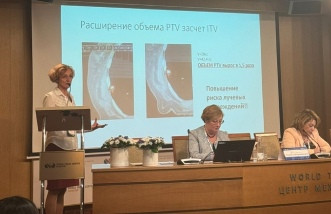






Long-term results of adjuvant therapy with dabrafenib and trametinib in stage III melanoma. COMBI-AD study.



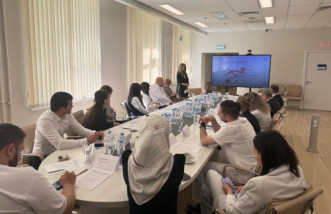
Top experts from K+31 and other clinics discussed a personalized approach to the assessment and treatment of pain in cancer patients.

Obesity is a chronic disease characterized by excessive accumulation of fatty tissue in the body.

Formations (so-called nodes) in the thyroid gland are often benign in nature, however, they require regular monitoring. It is important to carry out additional studies in a timely manner (including a biopsy of suspicious nodes) in order to diagnose cancer in a timely manner. process and begin appropriate treatment.

Oncopathology of this type is complicated by the location of the affected organ. Carrying out the operation requires high qualifications specialist and is often dangerous to the patient’s health. In addition, it is difficult to diagnose the disease at an early stage. not always, since the pathology develops over many years asymptomatically, and the appearance of the first signs may already indicate stage 3 or 4.

Bone tumor is a collective name for malignant and benign tumors that affect skeletal bone tissue (bone or cartilage). Malignant bone tumors are called sarcomas.

This type of anesthesia has become widely known due to its use in obstetrics and gynecology, as it is widely used to facilitate labor.
What do we treat
Price

To get a consultation
Reviews

Our clinics


Application “Personal Account K+31”












What is skin cancer?
Malignant oncological disease occurs when normal skin cells degenerate into atypical ones. Under the influence of adverse factors, the cell division mechanism is disrupted, and a pathological process is triggered instead of natural tissue renewal. A tumor forms, which may appear as a spot, nodule, ulcer, or altered mole.
Unlike benign neoplasms, which are not life-threatening, malignant ones are aggressive:
A distinctive feature of this type is that the skin is "visible," so many changes can be noticed at an early stage. This increases the likelihood of timely diagnosis.
Important! Regular self-examination and preventative visits to the doctor are among the most reliable ways to detect a disease at an early stage, when it is most amenable to treatment.