
Thyroid cancer: symptoms, diagnosis and treatment
Among oncological diseases, thyroid cancer is distinguished by its often slow-growing nature and high treatment response, especially when detected early. Oncologists and endocrinologists at K+31 conduct a complete examination and tailor treatment to your specific case.
Below are the different types of tumors, the signs to look for, and what thyroid cancer treatment involves.

specialists

equipment

treatment






Types of thyroid cancer
Tumors are divided into several types depending on the cells from which they arise. The type determines both the course of the disease and the treatment approach.
Papillary thyroid cancer
The most common and favorable variant. Papillary thyroid cancer grows slowly and spreads primarily through the lymph nodes.
Follicular thyroid cancer
The second most common tumor type, follicular thyroid cancer most often metastasizes through the bloodstream, but with timely treatment, the prognosis remains good.
Medullary thyroid cancer
Develops from specialized C-cells that produce calcitonin. Medullary cancer is sometimes hereditary and requires genetic testing.
Anaplastic thyroid cancer
The rarest and most aggressive variant, anaplastic cancer progresses rapidly and requires immediate treatment.
To compare the types by frequency, course, and treatment, we provide a table.
| Type | Origin | Frequency | Progress | Treatment |
|---|---|---|---|---|
| Papillary | Follicular cells | 80–85% | Slow, lymph node metastases | Thyroidectomy, radioiodine therapy |
| Follicular | Follicular cells | 10–15% | Blood metastases | Surgery, radioiodine therapy |
| Medullary | C cells | 5–8% | Familial forms, calcitonin | Thyroidectomy, targeted therapy |
| Anaplastic | Dedifferentiation | 1–2% | Aggressive, fast | Combination treatment |
As you can see, the four types differ greatly, which is why accurate diagnosis is important.
Causes and risk factors
The exact cause is not always known. However, certain conditions are known to increase the risk of developing the disease:
- Hereditary predisposition
- Exposure to ionizing radiation
- Glandular nodules
- Iodine deficiency
- Female gender and age
The presence of this factor does not necessarily indicate disease, but it does require careful attention to health.
Hereditary predisposition
Some cases are associated with familial forms. This is especially true for medullary cancer, for which genetic testing of relatives is recommended.
Exposure to ionizing radiation
A proven factor is irradiation of the head and neck area, especially in childhood. The risk increases years after exposure.
Thyroid nodules
Thyroid nodules require special attention. Most are benign, but some require clarification of their nature.

Symptoms of thyroid cancer

In the early stages, the disease often proceeds undetected. As the tumor grows, local symptoms associated with pressure on adjacent structures appear.
Early signs
The first manifestation is usually a painless lump in the neck. It may remain the only symptom for a long time and cause no discomfort.
Symptoms of disease progression
As the tumor grows, it puts pressure on adjacent organs. Hoarseness, difficulty swallowing, a feeling of pressure in the neck, and swollen lymph nodes may develop.

When to see a doctor
There are signs that you shouldn't delay a visit. It's worth making an appointment with an oncologist in the following cases:
- Appearance of a lump in the neck
- Rapid growth of the lump
- Harshness of voice
- Enlarged cervical lymph nodes
- Difficulty swallowing
- A feeling of pressure in the neck
Early treatment helps determine the nature of the lump and avoid wasting time.
Diagnosis of thyroid cancer
The examination is built around assessing the nodule and confirming its nature. At our center, thyroid cancer diagnosis is carried out in stages:
- Consultation with an oncologist and endocrinologist
- Ultrasound of the thyroid gland and neck
- Fine-needle biopsy of the thyroid gland
- Laboratory tests and tumor markers
- CT, MRI, or PET-CT as indicated
This procedure allows us to distinguish a benign nodule from a malignant one and determine the scope of treatment.
Consultation with an oncologist and endocrinologist
It all begins with an examination and a conversation. The doctor evaluates the nodule, lymph nodes, and glandular function, and then schedules the necessary tests.
Thyroid ultrasound
The basic imaging method is ultrasound. It shows the size and structure of the nodule and helps identify lesions requiring biopsy.
Fine-needle aspiration biopsy
The key step is collecting cells from the nodule with a fine needle. Cytological examination of the sample allows us to confirm or rule out a tumor.
Laboratory tests and tumor markers
Blood tests complete the picture. They evaluate hormone levels, and in the case of medullary cancer, calcitonin is a specific marker.
CT, MRI and PET-CT as indicated
For advanced disease, radiographic imaging is used. This helps clarify the tumor's boundaries and identify possible metastases.
"In our practice, thyroid tumors are often discovered incidentally during routine examinations. Therefore, timely diagnosis, expert evaluation of the results, and personalized treatment for each patient are of great importance,"
— oncologist.
General information
Thyroid cancer stages
The stage is determined by the tumor size and extent. The extent of treatment and prognosis depend on the stage, so staging is performed before therapy begins.
Localized disease
In the early stages, the tumor is limited to the gland itself. Treatment results at this stage are particularly good.
Regional spread
When the cervical lymph nodes are involved, the surgical procedure is expanded. However, the prognosis for most types remains favorable.
Distant metastases
If detected late, the tumor may spread to the lungs or bones. In such cases, treatment becomes systemic and longer.





Answers to frequently asked questions
We've compiled the most frequently asked questions from patients. The answers are general and do not replace an in-person consultation.
What symptoms may indicate thyroid cancer?
Does a lump in the gland always mean cancer?
What methods are used for treatment?
Is it possible to detect the disease at an early stage?
If detected early, thyroid cancer has a good prognosis. Accurate diagnosis, appropriate treatment, and specialist-guided treatment of thyroid tumors make it possible to maintain health and quality of life.
Clinical Guidelines of the Ministry of Health of the Russian Federation "Thyroid Cancer" — https://cr.minzdrav.gov.ru/
Category of Clinical Guidelines of the Ministry of Health of the Russian Federation — https://cr.minzdrav.gov.ru/
Russian Society of Clinical Oncology (RUSSCO) — https://rosoncoweb.ru
Association of Oncologists of Russia — https://oncology-association.ru
RLS Encyclopedia: Thyroid Cancer — https://www.rlsnet.ru
Disease Directory on the Doctor's Consultant Portal — https://www.rosmedlib.ru
eLIBRARY Scientific Electronic Library — https://www.elibrary.ru
CyberLeninka — publications on thyroid oncology — https://cyberleninka.ru
Russian Journal of Oncology (publication archive) — https://www.mediasphera.ru
Medical Bulletin Portal — https://medvestnik.ru
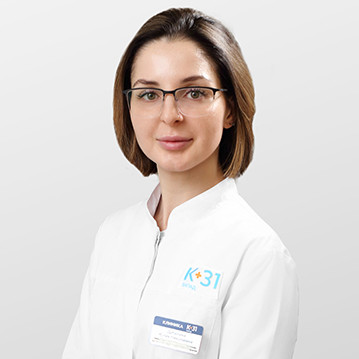
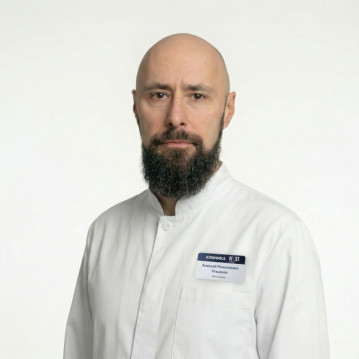
Our doctors



















This award is given to clinics with the highest ratings according to user ratings, a large number of requests from this site, and in the absence of critical violations.

This award is given to clinics with the highest ratings according to user ratings. It means that the place is known, loved, and definitely worth visiting.

The ProDoctors portal collected 500 thousand reviews, compiled a rating of doctors based on them and awarded the best. We are proud that our doctors are among those awarded.
Make an appointment at a convenient time on the nearest date
Price
Other cancer treatment services

Appointment to the doctor
Reviews









Our clinics


Application “Personal Account K+31”












What is thyroid cancer?
This is a malignant tumor that develops from the cells of the thyroid gland, a small organ in the front of the neck. Another name for it is thyroid carcinoma, and it is often simply referred to as thyroid cancer.
Characteristics of the disease
The main characteristic is its usually uneventful course and good prognosis. Most tumors grow slowly and remain confined to the organ for years.
How common is thyroid cancer?
It is the most common endocrine tumor. The disease is often diagnosed in people of working age, and women are more likely to develop it than men.