
Soft Tissue Tumors
A person's health largely depends on their attention to their own body, as many pathological processes can develop latently for a long time. In the oncology practice at K31 Clinic, soft tissue tumors occupy a special place. They can form in muscle, adipose, or connective tissue, as well as in blood vessels and peripheral nerves anywhere in the body.
Our team of oncologists deals with complex cases daily, and we know that early diagnosis of soft tissue tumors allows for the timely detection of dangerous changes.

specialists

equipment

treatment
What types of soft tissue tumors are there?
All detected soft tissue neoplasms are usually classified according to their cellular structure and potential danger to human life.
Benign tumors
This category is diagnosed significantly more frequently and includes:
- Lipomas
- Fibromas
- Hemangiomas
- Leiomyomas
- Neurofibromas
Each of these benign tumors is typically characterized by slow, expansive growth, clear capsule-like borders, and an inability to invade adjacent organs. They do not form secondary metastases and rarely cause general toxicity.
Malignant tumors (soft tissue sarcomas)
This group represents a severe oncological pathology characterized by an aggressive course and a tendency toward rapid infiltrative growth. Each soft tissue sarcoma is capable of destroying surrounding fascia, muscles, and bone structures.
There are many histological types of these tumors, among which the following are common:
- Liposarcoma
- Leiomyosarcoma
- Rhabdomyosarcoma
- Synovial sarcoma
- Undifferentiated pleomorphic sarcoma
These malignant soft tissue tumors have a high potential for hematogenous metastasis, in which tumor cells are carried via the bloodstream to the lungs, liver, or bones, forming secondary lesions.
|
Criteria |
Benign tumor |
Malignant tumor (sarcoma) |
|---|---|---|
|
Growth rate |
Slow, often over years |
Rapid, noticeable increase over weeks/months |
|
Risk of spread |
Absent (no metastases) |
High (hematogenous/lymphatic metastasis) |
|
Need for treatment |
Observation or local resection |
Comprehensive treatment required |
|
Risk of recurrence |
Low (after complete resection) |
Moderate to high, dynamic control required |
|
Forecast |
Favourable |
Depends on the stage, hypotype, adequacy of therapy |

Causes and risk factors
Modern science continues to study the precise triggers that initiate malignancy, but doctors at the K+31 Clinic highlight several confirmed facts.
Hereditary predisposition
There are certain congenital syndromes in which soft tissue tumors are diagnosed significantly more frequently.
Exposure to external factors
A link between the development of sarcomas and previous exposure to ionizing radiation, such as after radiation therapy for other cancers, has been proven. Exposure to chemicals such as arsenic, dioxins, thorotrast, and phenoxyacetic herbicides is also dangerous.
Chronic diseases and conditions
Long-standing pathological processes can become the basis for tumor transformation. This includes chronic lymphedema of the extremities (elephantiasis), which can lead to the development of a specific malignancy called lymphangiosarcoma. Also, old scars from severe thermal or chemical burns and foreign metal implants from previous orthopedic surgeries can be risk factors.
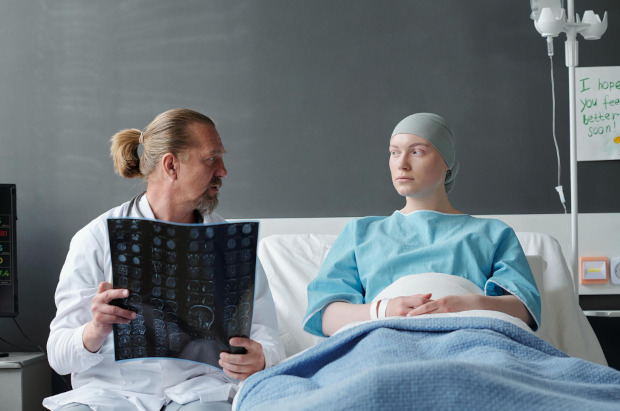
The insidiousness of this pathology lies in the fact that in the initial stages, its manifestations are minimal, and patients often fail to notice the danger for a long time.
Early Signs
The first symptoms of a soft tissue tumor are usually not accompanied by pain or deterioration in general health. A person may accidentally discover a dense or elastic soft tissue mass under the skin or in the muscle that is not fused with the skin and is easily displaced.
Symptoms as the mass enlarges
As the tumor progresses and the lesion enlarges, the clinical picture changes.

When to see a doctor
Signs that recommend consulting an oncologist:
- A dense lump appears under the skin or in the muscles
- A new or existing lump is increasing in size
- Constant pain or local discomfort occurs
- The usual function of a limb or joint is impaired
- The appearance of tissue changes, swelling or redness appears
- Symptoms persist for a long time without an obvious cause
If you notice these changes, you need an experienced soft tissue tumor oncologist.
Our approach to the treatment of soft tissue tumors
We build our work on the principles of evidence-based medicine and genuine concern for each patient's fate. Our clinic's comprehensive approach includes the following advantages:
- Interdisciplinary expert consultations to rule out medical errors when choosing treatment strategies.
- A complete tumor examination in a single medical center using expert-class equipment in just a few days.
- Using only original chemotherapeutic and targeted drugs with proven efficacy.
- Availability to obtain a second opinion from leading oncologists in case of controversial histological results.
Diagnosis of Soft Tissue Tumors
Successful treatment depends on an accurate diagnosis. At K31 Clinic, we complete all diagnostic steps as quickly as possible, providing patients with a comprehensive, expert-level approach.
Oncologist Consultation
The initial consultation begins with a detailed examination and palpation of the affected area. Our soft tissue tumor oncologist assesses the size, consistency, mobility, and tenderness of the tumor, and also checks the status of the regional lymph nodes.
Instrumental Research Methods
To visualize the pathological lesion and assess its relationship with surrounding structures, we use modern radiological diagnostic techniques:
- Magnetic resonance imaging (MRI): shows in detail the structure of soft tissues, tumor boundaries, and the extent of muscle and nerve involvement.
- Computer tomography (CT): used to assess the condition of adjacent bone structures.
- Positron emission tomography (PET/CT): helps identify hidden tumor foci throughout the body.
Biopsy and morphological examination.
To confirm malignant soft tissue tumors, a tumor biopsy is mandatory. We perform a core biopsy (trephine biopsy) under ultrasound or CT guidance, which allows us to obtain a tissue core for analysis. The resulting material is sent to a laboratory, where histological and immunohistochemical morphological examination is performed to determine the specific subtype of sarcoma and its degree of malignancy.




In our practice, we regularly encounter patients who ignore the appearance of soft tissue lumps for a long time. Any growth that increases in size or causes discomfort requires examination. Modern diagnostic methods allow us to accurately determine the nature of the tumor and choose the optimal treatment strategy. —
Don't put off taking care of your health until tomorrow, because time is of the essence in oncology. If you or a loved one has discovered a suspicious lump or would like to re-examine a previous diagnosis, schedule an appointment with our specialists.
Answers to frequently asked questions
Are soft tissue tumors dangerous?
Each benign tumor typically grows slowly and does not pose a direct threat to life, while soft tissue sarcoma can quickly destroy adjacent structures and metastasize to distant organs.
What symptoms may indicate a soft tissue tumor?
The most common symptoms include the appearance of a dense or elastic lump in the muscles or under the skin, a gradual increase in the size of the affected area, local discomfort, limited joint mobility, and pain that may worsen at night.
How are soft tissue tumors diagnosed?
The diagnostic process includes a detailed examination by a specialist physician, an MRI of the affected area to assess the structure of the nodule, a CT scan of the lungs to rule out spread of the disease, and mandatory histological confirmation of the diagnosis, which requires a tumor biopsy.
Is it possible to completely cure soft tissue tumors?
The possibility of a complete cure depends on the histological subtype of the tumor, its initial size, location, and the stage at which sarcoma treatment was initiated.
Our doctors







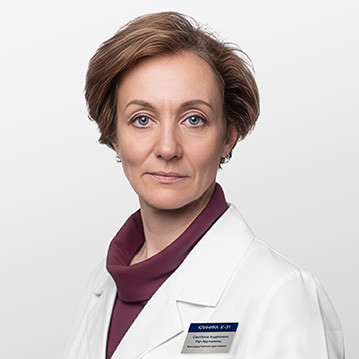
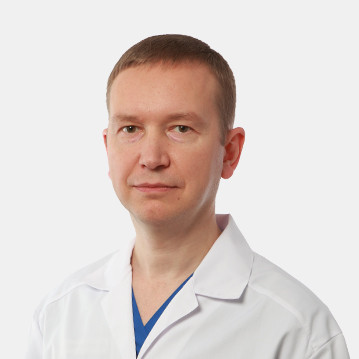


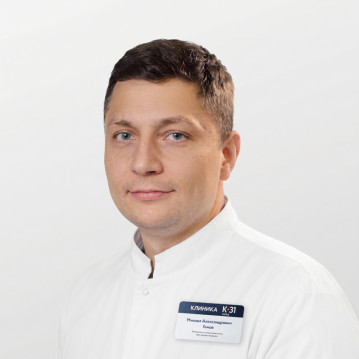

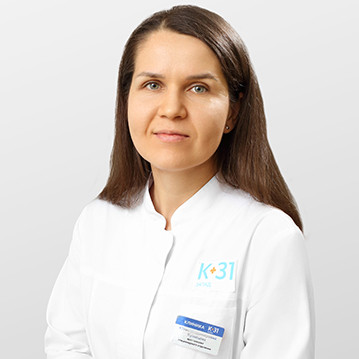



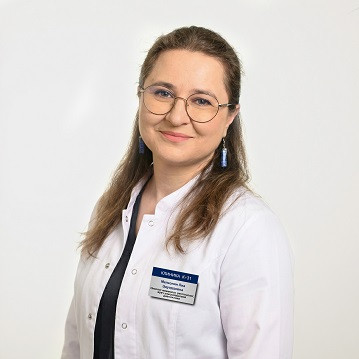
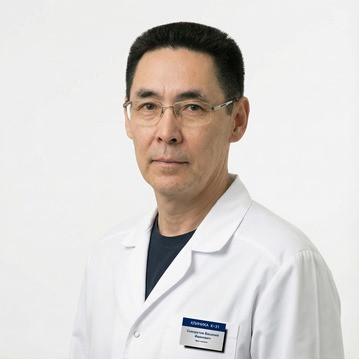



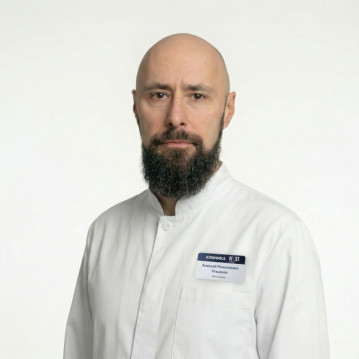


This award is given to clinics with the highest ratings according to user ratings, a large number of requests from this site, and in the absence of critical violations.

This award is given to clinics with the highest ratings according to user ratings. It means that the place is known, loved, and definitely worth visiting.

The ProDoctors portal collected 500 thousand reviews, compiled a rating of doctors based on them and awarded the best. We are proud that our doctors are among those awarded.
Make an appointment at a convenient time on the nearest date
Price
Other cancer treatment services

Appointment to the doctor
Reviews


















Our clinics


Application “Personal Account K+31”












What are soft tissue tumors?
This category includes elements of striated and smooth muscle, subcutaneous fat, tendons, fascia, synovial membranes of joints, and blood vessel walls. The lesion can be localized on the extremities, trunk, head, neck, or retroperitoneal space. The tumor process can trigger uncontrolled cell division, and the primary goal of our clinic's specialists is to determine the biological nature of this pathology.