
Acute leukemia (AML and ALL)
Some blood diseases develop rapidly and require prompt treatment. Acute leukemia is one such type.
At "K+31," we provide diagnostics and treatment. Below, our specialists explain the differences between AML and ALL, how acute leukemia is detected, and the benefits of promptly consulting a hematologist-oncologist.

specialists

equipment

treatment



What is acute leukemia
This is a malignant disease of the blood and bone marrow, in which immature tumor cells called blasts rapidly accumulate. They displace normal hematopoiesis, so acute leukemia, also known as blood cancer, requires urgent treatment. Unlike chronic forms, here the process is a matter of days and weeks.
Characteristics of acute myeloid leukemia (AML)
In this variant, the tumor develops from myeloid cells. Acute myeloid leukemia is more common in adults, and its course and prognosis largely depend on cytogenetic and molecular changes.
Characteristics of acute lymphoblastic leukemia (ALL)
The second variant originates from lymphoid precursors. Acute lymphoblastic leukemia is the most common blood cancer in children, although it also occurs in adults, and in younger patients, it is often highly treatable.
To make the differences between the two forms clearer, we'll summarize them in a table.
| Criteria | AML | ALL |
|---|---|---|
| Cell of origin | Myeloid blood cells | Lymphoid precursors |
| Age | More common in adults | The most common blood cancer in children |
| Symptoms | Anemia, Bleeding, weakness | Enlarged nodes, bone pain, fever |
| Diagnosis | Myelogram, immunophenotype, cytogenetics, PCR | Ditto for CSF analysis |
| Treatment | Chemotherapy, targeted drugs, HSCT | Polychemotherapy, prevention of neuroleukemia |
| Prognosis | Dependent on the tumor's genetics | Children often have a high chance of cure |
The table shows that, despite sharing the same name, the two diseases differ in both biology and treatment approaches.
Symptoms of acute leukemia

The disease progresses rapidly, so complaints mount over a short period of time. Most symptoms are related to tumor cells interfering with normal hematopoiesis.
General signs of the disease
Nonspecific complaints usually appear first, easily mistaken for fatigue. Early signs of leukemia include weakness, fatigue, loss of appetite, weight loss, and night sweats.
Symptoms associated with hematopoiesis disorders
Tumor cells displace normal cells, and the body lacks adequate blood cells. This leads to three characteristic groups of complaints:
- Anemia – pallor, weakness, shortness of breath during exertion
- Thrombocytopenia – bruising, bleeding gums and nose
- Neutropenia – frequent and protracted infections
This combination in a blood test almost always warrants urgent examination.

When to see a doctor urgently
There are signs that require immediate attention. You should make an appointment with an oncohematologist in the following cases:
- Persistent weakness and fatigue
- Frequent infections
- Increased bleeding
- Unexplained bruising
- Prolonged fever
- Pale skin
- Swollen lymph nodes
- Bone and joint pain
A combination of several of these symptoms is a compelling reason to see a doctor immediately.
Diagnosis of acute leukemia
The examination is carried out quickly and according to a clear plan, because the result depends on speed. Typically, the diagnosis of acute leukemia follows this sequence:
- Consultation with an oncohematologist and examination
- Blood test for leukemia - general and biochemical
- Bone marrow examination (myelogram)
- Immunophenotyping, cytogenetics and molecular tests
- Evaluation of prognosis and risk factors
This procedure allows not only to confirm the diagnosis but also to accurately determine the type of disease.
Consultation with an oncohematologist
The first step is an examination and assessment of complaints. The doctor analyzes the symptoms and test results, then immediately orders the necessary tests.
Laboratory blood tests
The basic method is a general and biochemical analysis. It shows the levels of leukocytes, hemoglobin, and platelets, as well as the presence of blast cells.
Bone marrow examination
Bone marrow examination plays a key role. A puncture and myelogram reveal the proportion of blasts and confirm the diagnosis definitively.
Immunophenotyping and molecular diagnostics
To accurately determine the type of disease, advanced methods are used. Immunophenotyping determines the immune phenotype of cells, while cytogenetics and molecular diagnostics identify characteristic mutations.
Determination of prognosis and risk factors
Based on all the data, the doctor evaluates the prognosis. The results obtained help classify the patient into a risk group and select the appropriate treatment protocol.
"In our practice, early and accurate diagnosis is crucial. Modern molecular analysis helps not only confirm the type of acute leukemia but also select the most effective personalized treatment strategy for each patient,"
— oncohematologist.
Modern treatment methods for acute leukemia
Treatment begins immediately after diagnosis. Our specialists develop an individualized plan, and treatment for acute leukemia typically combines several approaches.
Drug antitumor therapy
The basis is chemotherapy according to international protocols. Chemotherapy for leukemia suppresses tumor cells and occurs in several stages, from induction to consolidation.
Targeted therapy
For certain mutations, targeted drugs are used. Targeted therapy affects specific tumor growth mechanisms and increases treatment effectiveness.
Immunotherapy
A separate area is agents that help the immune system recognize tumor cells. Immunotherapy has significantly expanded treatment options, especially during relapses.
Maintenance treatment
During therapy, it is important to support the body. Blood transfusions, infection prevention and treatment, and medications to improve chemotherapy tolerance are used.
Hematopoietic stem cell transplant
Some patients are candidates for a stem cell transplant. Stem cell transplantation can restore healthy hematopoiesis and is considered in cases of high risk of relapse.



FAQ
We've compiled the most frequently asked questions from patients. The answers are general and do not replace an in-person consultation with an oncohematologist.
What's the difference between AML and ALL?
What symptoms may indicate acute leukemia?
What tests are needed to confirm the diagnosis?
Is it possible to achieve remission in acute leukemia?
Acute leukemias require rapid and accurate decisions, and this is their main difference from chronic forms. Timely diagnosis of acute leukemia, modern protocols, and treatment of AML or ALL under the supervision of an oncohematologist offer many patients a real chance for long-term remission.
Category of Clinical Guidelines of the Ministry of Health of the Russian Federation — https://cr.minzdrav.gov.ru/
Portal of the All-Russian Public Organization "Russian Society of Oncohematologists" — https://oncohematology.ru/
Russian Society of Clinical Oncology (RUSSCO) — https://rosoncoweb.ru
National Medical Library PubMed (Russian-language materials and reviews on the topic) — https://pubmed.ncbi.nlm.nih.gov
Disease Directory on the Doctor's Consultant Portal — https://www.rosmedlib.ru
Encyclopedia and Reference Materials of the Russian Medical Society — https://www.rmj.ru
Federal State Budgetary Institution "National Medical Research Center of Hematology" of the Russian Ministry of Health — https://blood.ru
A large medical encyclopedia and specialized materials on hematology — https://www.mediasphera.ru
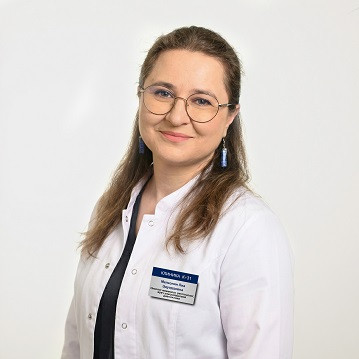
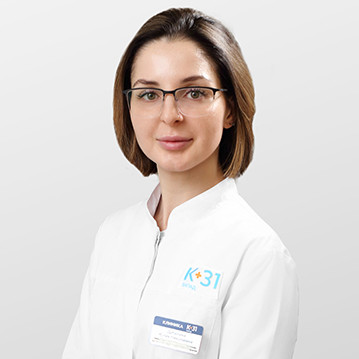
Our doctors






































This award is given to clinics with the highest ratings according to user ratings, a large number of requests from this site, and in the absence of critical violations.

This award is given to clinics with the highest ratings according to user ratings. It means that the place is known, loved, and definitely worth visiting.

The ProDoctors portal collected 500 thousand reviews, compiled a rating of doctors based on them and awarded the best. We are proud that our doctors are among those awarded.
Make an appointment at a convenient time on the nearest date
Price
Other cancer treatment services

Appointment to the doctor
Reviews



Our clinics


Application “Personal Account K+31”












Causes and risk factors
The exact cause is rarely determined. Random breaks in bone marrow cells are the cause, but certain conditions that increase the risk are also known:
The presence of a factor does not necessarily mean the disease will develop, but it requires careful attention to health.
Genetic disorders
The disease is based on breaks in the genes of hematopoietic cells. These breaks cause the cell to lose control over division and maturation, which triggers the tumor process.
Exposure to external factors
The environment plays a role. Radiation, exposure to toxic substances, and certain types of previous treatments are all significant.
Blood diseases and preexisting conditions
Sometimes acute leukemia doesn't develop spontaneously. It can be preceded by myelodysplastic syndrome and other bone marrow diseases.