
Non-Hodgkin's lymphoma: diagnosis and treatment
The general term non-Hodgkin's lymphomas covers several dozen different diseases of the lymphatic system. Some develop aggressively, while others take years.
At "K+31," we provide comprehensive diagnostics and treatment for lymphomas. Below, we explain the differences between diffuse and follicular forms, how lymphoma diagnosis is structured, and what modern treatment for non-Hodgkin's lymphoma includes.

specialists

equipment

treatment



What are non-Hodgkin's lymphomas?
This is a large group of tumors that arise from lymphatic tissue cells, most often from lymphocytes. Unlike Hodgkin's lymphoma, there is no single prognosis: each non-Hodgkin's lymphoma has its own characteristics of progression and prognosis.
Characteristics of the disease
The main characteristic is diversity. The tumor can grow:
- In the lymph nodes
- Bone marrow
- Spleen
It can even appear in organs outside the lymphatic system, which changes both the symptoms and the treatment approach.
How do non-Hodgkin's lymphomas differ from Hodgkin's lymphoma?
The key difference lies in the tumor structure and cell composition. In Hodgkin's disease, specific Reed-Sternberg cells are found, while in other lymphomas the picture is different, so treatment regimens differ.
Main types of non-Hodgkin's lymphoma
The group encompasses a variety of variations, but two forms are most commonly encountered at reception. These are conveniently thought of as two poles—fast and slow.
Diffuse large B-cell lymphoma
The most common aggressive variant, which develops from B-lymphocytes, diffuse large B-cell lymphoma grows rapidly and requires prompt treatment, but it responds well to treatment.
Follicular lymphoma
Opposite in its course. Follicular lymphoma is an indolent, or slow-growing, form; it can cause little or no symptoms for years and remains under control for a long time.
Other types of non-Hodgkin's lymphoma
In addition to the two main forms, there are also rarer ones. These include:
- Mantle cell lymphoma
- Marginal zone lymphoma, including MALT type
- T-cell lymphomas
- Burkitt's lymphoma
The exact subtype is determined by tissue examination, and it determines the choice of therapy.
To make the differences between the two main forms clearer, we summarize them in a table.
| Parameter | Diffuse large B-cell | Follicular |
|---|---|---|
| Progression type | Aggressive | Indolent, slow |
| Progression | Rapid | Gradual, over years |
| Frequency | Most Frequently aggressive | Frequently indolent |
| Symptoms | Rapid node growth, intoxication | Long-term, asymptomatic node enlargement |
| Treatment | Immunochemotherapy | From observation to immunotherapy |
| Observation | Active treatment immediately | Sometimes watchful waiting |
How Apparently, the two forms require different reaction speeds and different amounts of assistance.
Symptoms of non-Hodgkin's lymphoma

Manifestations depend on the type of tumor and its location. Some complaints are related to the nodes, while others reflect the body's overall response.
Swollen lymph nodes
The most common symptom is painless swelling of the lymph nodes in the neck, armpits, or groin. The nodes may remain the only manifestation of the disease for a long time.

General symptoms of intoxication
Along with the nodules, systemic complaints often appear. The main symptoms of lymphoma include:
- Increased fatigue and weakness
- Unexplained weight loss
- Prolonged fever
- Night sweats
- Shortness of breath or cough with chest involvement
These signs alone are nonspecific, but their combination is a compelling reason for examination.
Manifestations with internal organ involvement
When the tumor affects organs, other symptoms are added. Abdominal pain, bowel disturbances, and heaviness in the hypochondrium with an enlarged spleen or liver are possible.

When should you see an oncologist?
There are situations that require immediate consultation. Persistent enlargement of lymph nodes, weight loss, persistent fever, and night sweats are all signs that a lymphoma oncologist should begin an examination as soon as possible. The sooner the diagnosis is confirmed or ruled out, the more confident the patient's decision will be.
Diagnosis of non-Hodgkin's lymphomas

A diagnosis is made based on tissue examination, not just laboratory tests. At our center, lymphoma diagnosis is performed in stages:
- Consultation with an oncohematologist and examination
- Blood laboratory tests
- Lymph node biopsy with histology
- Immunohistochemical examination to determine the subtype
- Imaging - CT and PET-CT for lymphoma staging
This procedure allows us not only to confirm the disease but also to accurately identify its variant.
Specialist consultation
The first appointment is a discussion and examination. The doctor evaluates the nodes and the patient's general condition, then determines which tests are needed first.
Laboratory diagnostics
Blood tests reflect the activity of the process and organ function. They do not replace morphology, but they help assess anemia, inflammation, and the condition of the liver and kidneys.
Lymph node biopsy
The basis of diagnosis is an examination of the tissue of the affected node. A lymph node biopsy with histological examination reveals the tumor's structure and differentiates lymphoma from other diseases.
Immunohistochemical examination
To determine the exact subtype, the tissue is further examined. Immunohistochemical examination identifies specific proteins on the cell surface and allows for the classification of the tumor to a specific variant.
CT, PET-CT, and other imaging methods
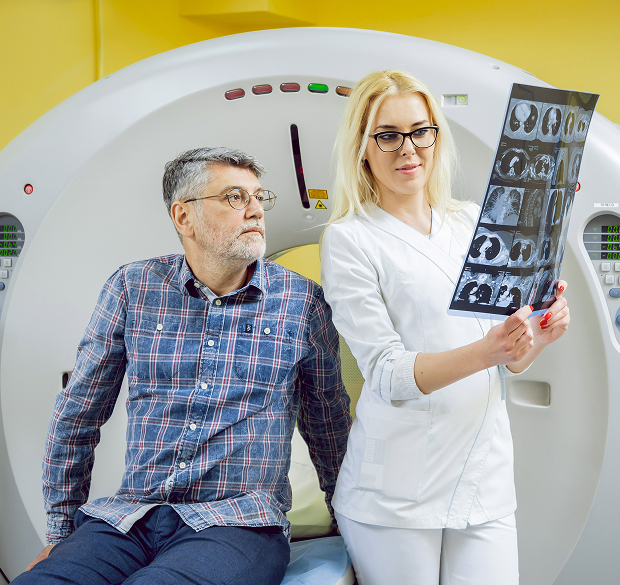
The extent of the process is assessed using imaging techniques. CT and PET-CT show all lesions and their metabolic activity, and these same studies are then used to monitor treatment.
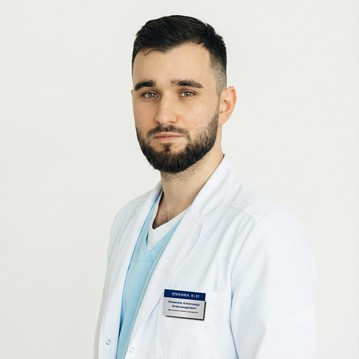
"In our practice, timely biopsy and immunohistochemical examination allow us to quickly establish an accurate diagnosis and select an effective treatment strategy." Therefore, we pay special attention to high-quality diagnostics and discussing each case at a consultation,"
— oncologist.
The disease is divided into four stages based on the number and location of lesions. Early stages are limited to a single area, while later stages involve organs and bone marrow. The extent of therapy depends on the stage of the lymphoma.
General information
Modern treatment methods
The program is composed of several methods tailored to a specific subtype and stage. Our specialists develop an individualized treatment plan based on international recommendations.
Drug therapy
The basis is chemotherapy using standard protocols. It targets tumor cells throughout the body and is used for most types of the disease.
Immunotherapy
An important area is drugs that specifically bind to tumor cells. Immunotherapy of lymphoma in combination with chemotherapy has significantly improved results in B-cell forms.
Targeted therapy
For some subtypes, targeted drugs are used. Targeted therapy affects specific mechanisms of tumor growth and is especially useful in relapses.
Radiation therapy
Irradiation is used locally, most often for limited stages of the disease. It complements drug therapy and helps to consolidate the results in the area of the original lesion.
Combination therapy
Methods are often combined. The combination is chosen to achieve maximum effect with reasonable tolerability.





Answers to frequently asked questions
We've compiled the most frequently asked questions from patients. The answers are general and do not replace an in-person consultation.
What is diffuse large B-cell lymphoma?
Is it possible to completely cure non-Hodgkin's lymphoma?
What tests are needed for diagnosis?
How does follicular lymphoma differ from diffuse lymphoma?

Rubricator of clinical recommendations of the Ministry of Health of the Russian Federation - https://cr.minzdrav.gov.ru/
Scientific electronic library eLIBRARY - https://www.elibrary.ru
Portal of the All-Russian National Union “Association of Oncologists of Russia” - https://oncology-association.ru
Russian Society of Clinical Oncology (RUSSCO) - https://rosoncoweb.ru
National Medical Library PubMed (Russian-language materials and reviews on the topic) - https://pubmed.ncbi.nlm.nih.gov
CyberLeninka - scientific publications on oncohematology - https://cyberleninka.ru
Federal Electronic Medical Library - https://femb.ru
MSD Manual (Russian version) - https://www.msdmanuals.com/ru
Radar Encyclopedia - https://www.rlsnet.ru
Russian Society of Oncohematology - https://oncohematology.ru
Our doctors


































This award is given to clinics with the highest ratings according to user ratings, a large number of requests from this site, and in the absence of critical violations.

This award is given to clinics with the highest ratings according to user ratings. It means that the place is known, loved, and definitely worth visiting.

The ProDoctors portal collected 500 thousand reviews, compiled a rating of doctors based on them and awarded the best. We are proud that our doctors are among those awarded.
Make an appointment at a convenient time on the nearest date
Price
Other cancer treatment services

Appointment to the doctor
Reviews



Our clinics


Application “Personal Account K+31”











Causes and risk factors
The exact cause is often impossible to determine. It involves the accumulation of random changes in cells, rather than infection in the common sense.
Genetic and immunological factors
Some cases are associated with defects in lymphocyte genes and immune dysfunction. Congenital and acquired immunodeficiencies increase the likelihood of tumor development.
The impact of chronic infections
Long-term infections play a significant role. The development of some lymphomas is associated with the Epstein-Barr virus, hepatitis, and the Helicobacter pylori bacterium in gastric MALT lymphoma.
Other risk factors
External influences and age complete the list. Exposure to certain chemicals, ionizing radiation, and a decline in the immune response over time are all significant; Let's list the most significant circumstances:
None of these factors makes the disease inevitable, but they increase the risk and require attention to health.