
Vaginal Cancer
This is a rare tumor of the female reproductive organs, most often occurring after age 60. Vaginal cancer can remain undetected for a long time, and the first sign is usually bleeding. When detected early, the disease is highly treatable, so it's important not to ignore warning signs. An oncologist can help.

specialists

equipment

treatment







Causes and risk factors for the development of the disease

The exact cause is difficult to pinpoint, but key factors are known. Most cases are associated with infection and age-related changes.
Age-Related Changes
Age is a significant factor: the disease most often develops in older women, after menopause, when the mucous membrane thins.
HPV and Infectious Factors
Infection plays a key role. HPV is detected in most cases, so the link between HPV and vaginal cancer is considered proven.
Precancerous Conditions
Changes in the mucous membrane often precede cancer. Dysplasia is a precancerous condition that can be treated early if monitored.
Symptoms of vaginal cancer

The early stages often proceed without complaints. Symptoms of vaginal cancer typically appear when the tumor is already growing.
Early Signs
The first sign is usually bleeding: spotting outside of menstruation or after intercourse, or in older women, after menopause.
Symptoms in Later Stages
Later, other complaints may appear: pelvic pain, heavy or foul-smelling discharge, and urinary difficulties. These signs of vaginal cancer should not be ignored.

The stage is determined by the depth of invasion and the extent of the malignant process. Vaginal cancer stages influence treatment choice and prognosis.
Disease Classification
A distinction is made between precancerous changes and invasive malignant tumors of the vagina. Lymph node involvement and the presence of distant metastases are assessed separately.
Characteristics of the disease at different stages
In the early stages of the disease, the tumor is limited to the vaginal wall. As it grows, the tumor spreads to adjacent organs and lymph nodes, complicating treatment.
General information
Vaginal Cancer Diagnosis
An examination confirms the diagnosis and determines the stage. Vaginal cancer diagnosis is based on an examination, biopsy, and imaging and typically follows these steps:
- Gynecological examination and specialist consultation
- Colposcopy
- Biopsy of the affected area
- Tissue morphology
- CT or MRI to assess the extent
The diagnosis cannot be confirmed without a tissue examination. This comprehensive diagnosis allows for an accurate determination of the stage.
Gynecological examination
They begin with an examination. The doctor assesses the condition of the mucosa, identifies suspicious areas, and refers the patient for further testing.
Colposcopy
This is a magnified examination. Colposcopy allows for the detection of minor changes in the mucosa and the selection of a biopsy site.
Biopsy and morphological examination
The diagnosis is confirmed by tissue analysis. A vaginal biopsy with morphological examination accurately determines the tumor type and grade.
CT, MRI, and other imaging modalities
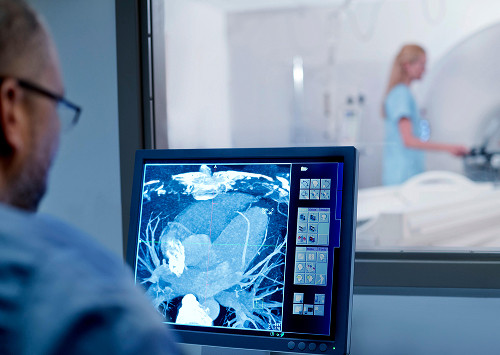
X-ray imaging is used to assess tumor spread. A pelvic MRI shows the depth of invasion, while a CT scan reveals metastases and enlarged lymph nodes. The methods are conveniently compared in the table.
| Method | What it detects | When it is used |
|---|---|---|
| Gynecological examination | Visible changes in the mucous membrane | Primary diagnosis |
| Colposcopy | Suspicious tissue areas | Further examination |
| Biopsy | Confirmation of diagnosis | If a diagnosis is suspected Tumor |
| MRI | Prognosis Extent | Treatment Planning |
No method replaces another. Our specialists especially value early consultation.
"In our practice, we regularly encounter situations where the disease is detected at an early stage thanks to timely examination. An individual diagnostic and treatment plan is developed for each patient with the participation of specialists from various fields."




Benefits of contacting our specialists
This tumor requires the coordinated work of an oncologist, gynecologist, and radiation therapist, and our center provides this approach. What the patient receives:
- A full cycle of diagnostics and treatment in one place
- Interdisciplinary support at all stages
- Individualized treatment plan
- Modern methods of oncological care
- Results monitoring and follow-up
- Reliance on current clinical guidelines
This format saves time and improves accuracy at every stage—from examination to follow-up.

When to schedule an oncologist consultation
Any of the listed symptoms is a reason not to delay your visit. You should schedule an oncologist consultation if you experience:
- Bleeding outside of your menstrual cycle
- Pain or discomfort in the pelvic area
- Pain during intercourse
- Changes in discharge
- Urinary problems without an obvious cause
The information in this article is for informational purposes only and does not replace an in-person consultation: any symptoms require professional diagnosis, and self-medication is unacceptable.
Answers to frequently asked questions
Below are frequently asked questions from patients.
What are the first symptoms of vaginal cancer?
How is vaginal cancer diagnosed?
Can vaginal cancer be cured?
What treatments are used for this type of cancer?
Depending on the specific situation, radiation therapy, surgery, chemotherapy, or a combination of these are used.
The disease is curable, especially when caught early; this cancer responds well to treatment in its early stages. Don't delay your visit to the K+31 Clinic out of embarrassment or fear—early detection significantly improves your chances. If you notice signs of vaginal cancer, schedule an appointment with an oncologist.
References
- Category of Clinical Guidelines of the Ministry of Health of the Russian Federation
- Portal of the All-Russian Public Organization "Russian Society of Clinical Oncology"
- Russian Society of Gynecologic Oncologists
- Scientific Electronic Library eLIBRARY
- CyberLeninka — publications on gynecologic oncology
- MSD Manual (Russian version)
- RMJ (Russian Medical Journal)
- National Medical Research Center of Oncology
- National Medical Research Center of Radiology of the Ministry of Health of Russia
- PubMed (for checking primary research sources)
Our doctors
















































This award is given to clinics with the highest ratings according to user ratings, a large number of requests from this site, and in the absence of critical violations.

This award is given to clinics with the highest ratings according to user ratings. It means that the place is known, loved, and definitely worth visiting.

The ProDoctors portal collected 500 thousand reviews, compiled a rating of doctors based on them and awarded the best. We are proud that our doctors are among those awarded.
Make an appointment at a convenient time on the nearest date
Price
Other services

Appointment to the doctor
Reviews


















Our clinics


Application “Personal Account K+31”











