Cancer of the uterine body (endometrial cancer)
This is the most common malignant tumor of the female reproductive system, and most women recognize it early—by one warning sign. Uterine cancer, or endometrial cancer, most often presents with bleeding after menopause. This is why it is often detected in its early stages, when treatment is most effective. An oncologist at K+31 can help you understand the situation.

specialists

equipment

treatment







Causes and risk factors for endometrial cancer
The exact cause cannot be determined. However, conditions that increase the risk are known. Most of these are associated with excess estrogen.
Hormonal factors
Hormonal imbalance plays a major role. Long-term excess estrogen without counterbalance from progesterone—as seen with obesity, early onset, and late end of menstruation—increases the risk.
Age and comorbidities
Age matters. The disease most often develops after menopause. The risk is higher:
- Obesity
- Diabetes
- Hypertension
Hereditary predisposition
Some cases are linked to genetics. Hereditary Lynch syndrome increases the risk of developing the disease and requires earlier monitoring.

Uterine cancer symptoms
The main advantage of this tumor is its early symptomatology. Symptoms of uterine cancer usually appear when the disease is still operable.
Early signs of the disease
The most important sign is bleeding. Any spotting after menopause, and in young women, intermenstrual bleeding and heavy periods require attention.
Late-stage symptoms
Late symptoms of uterine cancer include lower abdominal pain, watery or purulent discharge, abdominal distension, and weight loss.

When to see an oncologist
Any uterine bleeding outside of your period or after menopause is a reason to see an oncologist. You should make an appointment with an oncologist if you experience:
- Bloody discharge after menopause
- Intermenstrual bleeding
- Unusual vaginal discharge
- Lower abdominal pain
- Prolonged menstrual irregularities
- Unexplained abdominal enlargement
None of these signs necessarily indicate cancer, but each requires evaluation. The sooner you see an oncologist, the better.
Diagnosis of endometrial cancer
The examination should confirm the diagnosis and determine the stage of the disease. Diagnosis of endometrial cancer combines ultrasound and examination of the uterine cavity. Tissue analysis is also mandatory. And usually the diagnosis is carried out in the following order:
- Specialist consultation and examination
- Ultrasound of the pelvic organs
- Hysteroscopy with endometrial biopsy
- Histological examination of the material
- CT or MRI to assess the spread
The key point is that a diagnosis is not made without tissue analysis. This is part of the general diagnosis of oncological diseases.
Specialist consultation
They begin with an examination and interview. The gynecologic oncologist evaluates your complaints, medical history, and examination findings, and then prescribes tests.
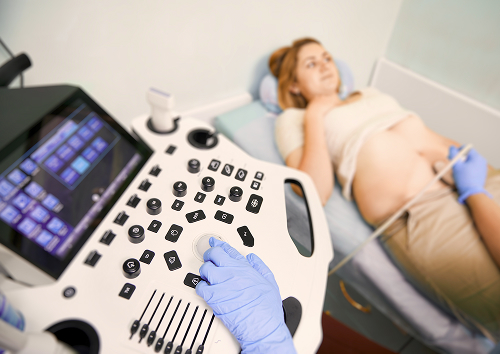
Ultrasound of the pelvic organs
Ultrasound is the first instrumental method. It measures the thickness of the endometrium. This method helps identify suspicious changes. This is especially important after menopause.
Hysteroscopy and endometrial biopsy
This is the primary method for obtaining tissue. Hysteroscopy allows for an internal examination of the uterine cavity and a targeted endometrial biopsy.
Histological examination
The final diagnosis is made based on tissue analysis. Morphological verification accurately determines the type and degree of tumor malignancy and serves as the basis for treatment.
CT, MRI and additional examination methods
To assess the spread of the tumor, radiological methods are used. Pelvic MRI shows the depth of invasion, and CT scans reveal metastases and enlarged lymph nodes. The methods are conveniently compared in the table.
| Method | What it reveals | When it is used | Diagnostic value |
|---|---|---|---|
| Pelvic ultrasound | Endometrial thickness and structure, formations | Initial examination | High, non-invasive screening |
| Hysteroscopy with biopsy | Uterine cavity, tissue collection | When Suspected pathology | Gold standard, verification |
| Pelvic MRI | Depth of invasion, spread | For staging | High for local assessment |
| CT with contrast | Metastases in lymph nodes and organs | If spread is suspected | High for detecting metastases |
No one method replaces the other—they are combined. Our specialists emphasize the value of early treatment.
"In our practice, we regularly encounter situations where endometrial cancer is detected at an early stage thanks to timely screening. That's why it's important to consult a specialist immediately if you notice any abnormal bleeding. A comprehensive approach and modern diagnostic methods allow us to select the optimal treatment plan for each patient."
Stages of uterine cancer
The stage is determined by the extent of the tumor's spread; this determines the extent of treatment and prognosis. Uterine cancer stages are divided into four groups.
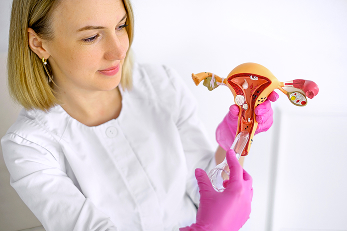
- First stage A uterine tumor is confined to the uterine body. This is the most common and favorable situation, in which surgery is usually sufficient.
- The second stage The tumor has spread to the cervix but has not extended beyond the organ; radiation therapy is often added to the surgery.
- The third stage The process affects surrounding tissues, appendages or lymph nodes, and the treatment here is combined.
- The fourth stage The tumor has metastasized distantly; at this stage, systemic drug therapy becomes the mainstay of treatment.
Modern treatment methods
There is no single treatment plan. The plan depends on the stage, tumor type, and the patient's condition. Treatment for endometrial cancer almost always begins with surgery, while uterine cancer, which requires multidisciplinary treatment, is managed by a team of specialists.
Surgical treatment
Surgery is the mainstay of treatment. Surgery typically involves removal of the uterus and appendages, and, if necessary, lymph nodes.
Radiation therapy
Radiation therapy complements surgery for intermediate- and high-risk cancers. Radiation therapy reduces the risk of recurrence in the pelvis.
Drug therapy
In cases of widespread disease, systemic treatment is used: chemotherapy targets tumor cells throughout the body.
Hormone therapy
Hormonal therapy is suitable for some patients. Treatment for endometrial cancer in young women is sometimes organ-preserving.
Targeted therapy and immune therapy
Modern approaches are targeted. Endometrial cancer, whose treatment takes into account the tumor's molecular characteristics, is increasingly being treated with targeted and immune therapies.
The decision is made not by a single doctor, but by a team of doctors. A multidisciplinary approach takes into account the stage, type, and grade of the tumor, age, comorbidities, and the patient's wishes, and an individualized treatment plan for uterine cancer is developed for each woman.
General information
Rehabilitation and post-treatment monitoring
After treatment, the patient remains under observation for several years. Follow-up monitoring helps detect relapses early and includes:
- Regular examinations by a gynecologic oncologist
- Ultrasound of the pelvic organs
- CT or MRI scans if necessary
- General health monitoring
- Attention to any new symptoms
Most relapses occur within the first two to three years, so regular visits are especially important.


Answers to frequently asked questions
Below are the questions that patients most frequently ask.
What symptoms may indicate uterine cancer?
Is it possible to detect endometrial cancer at an early stage?
What methods are used to treat uterine cancer?
Is it necessary to undergo follow-up after completion of treatment?
Endometrial cancer is one of the most curable cancers when detected early. Modern cancer treatments allow many patients to achieve a full recovery.
Don't delay your appointment if you notice spotting or other alarming signs. Schedule a consultation with an oncologist at K+31.
Clinical guidelines of the Russian Ministry of Health. Endometrial Cancer — https://cr.minzdrav.gov.ru/
Clinical Guidelines Index of the Russian Ministry of Health — https://cr.minzdrav.gov.ru/
Scientific Electronic Library eLIBRARY — https://elibrary.ru
CyberLeninka (publications on gynecological oncology) — https://cyberleninka.ru
Oncology of Russia Portal — https://www.cancer.ru
Russian Society of Clinical Oncology (RUSSCO) — https://rosoncoweb.ru
Federal Project "Oncopatrol" and relevant materials of the Russian Ministry of Health — https://onco-life.ru
Radar Handbook (Oncology Section) — https://www.rlsnet.ru
N.N. Blokhin National Medical Research Center of Oncology — https://www.ronc.ru
N.N. Blokhin National Medical Research Center of Oncology — https://www.ronc.ru
Our doctors
















































This award is given to clinics with the highest ratings according to user ratings, a large number of requests from this site, and in the absence of critical violations.

This award is given to clinics with the highest ratings according to user ratings. It means that the place is known, loved, and definitely worth visiting.

The ProDoctors portal collected 500 thousand reviews, compiled a rating of doctors based on them and awarded the best. We are proud that our doctors are among those awarded.
Make an appointment at a convenient time on the nearest date
Price
Other cancer treatment services

Appointment to the doctor
Reviews












Our clinics


Application “Personal Account K+31”