Impingement syndrome of the shoulder

Shoulder pain is a common complaint among patients visiting an orthopedist. A common cause of chronic pain is impingement syndrome of the shoulder.

The doctors at the K+31 multidisciplinary clinic diagnose, treat, and surgically treat this condition. Depending on the severity of symptoms and the stage, we select therapy and provide rehabilitation recommendations.

Best
specialists
Expert
equipment
Advanced diagnostic
treatment
Sign up
Fill out the entry form on the page and we will call you back
Sign up Позвонить
Download the application “Personal Account K+31”
Everything about your health in one click!
Subscribe to social networks K+31
To keep up to date with current offers and receive useful advice about your health.

General information about impingement syndrome

In this syndrome, soft tissues are compressed by denser joint structures, causing pain and limited movement. The term first appeared in 1972. Scientists described the condition using the glenohumeral joint as an example. The condition involves mechanical compression of the glenohumeral cuff and tendons.

The result is an inflammatory process that gradually increases in intensity. Constant trauma triggers degenerative processes and joint deformation.

Clinical signs most often appear in male patients over 40 years of age who engage in physical labor. Among the younger population, the problem is more common among professional athletes.

Due to the absence of symptoms in the early stages, many seek medical attention only when degenerative changes have already occurred, complicating treatment.

General information about impingement syndrome

Causes and mechanisms of development
The key cause is an imbalance between the bony portion of the scapula (the acromion) and the head of the humerus. Over time, the space between the two segments narrows.

When moving the arms, the two segments collide. The tendons rub against the bony process, causing constant trauma. Here are some predisposing factors for impingement syndrome:

  • Congenital anatomical features of the acromion
  • Osteophytes in the acromioclavicular region
  • Thickening of the muscle tissue along the anterior part of the acromion
  • Post-traumatic deformities in bone tissue
  • Arthrosis
  • Chronic bursitis
  • Rotator cuff inflammation in the shoulder
  • Unstable shoulder joint position

Risks increase with increased physical activity and previous injuries.

Classification and types of impingement syndrome

Depending on the severity of the disease's progression, it is divided into three stages. In the first stage, hemorrhages appear and soft tissues swell. The condition and integrity of the tendons remain unchanged, and the patient experiences no discomfort.

In the second stage, signs of chronic inflammation and tissue fibrosis can be detected. Tears appear on the tendon surface.

The third stage is characterized by the formation of osteophytes. Degenerative processes begin in the soft tissues. Even with minimal stress and rotational movements, the tendon may rupture.

By nature of occurrence, the syndrome can be primary—caused by congenital anomalies and hereditary factors—or secondary—caused by trauma and excessive stress.

Let's consider the classification of the disease by location.

Subacromial impingement syndrome

It occurs due to pressure on the supraspinatus tendon. Immediately after this pressure, the tissue swells, and small hemorrhages appear. Due to pain, the patient can barely raise their arm.

Furthermore, fibrous changes begin, and the connective tissue grows. The pain becomes aching, and its intensity decreases at rest.

After about 3 months, degenerative, dystrophic changes begin. The tendons become damaged, even to the point of rupture, and bone volume increases. There is no pain at rest, but range of motion is severely limited. Due to the lack of mobility, muscle volume decreases.

Subcoracoid impingement syndrome

In this case, the subscapularis tendon is compressed. Gradually, the muscle becomes less functional. As the inflammation progresses, the pain intensifies, and spasms occur. Over time, degenerative processes begin in the tendon area.

The pain is predominantly felt in the upper anterior portion of the limb, and becomes more intense when turning or bending the arm.

Anterosuperior and posterosuperior impingement syndrome

In the anterior-superior type, the tendon surface is injured by the anterior portion of the glenoid cavity of the scapula; in the posterosuperior form, it is injured by the posterior portion. This form is never congenital, but rather secondary, and is most often observed in injuries to professional athletes.

Pain occurs in the front or back, when swinging the arm. Range of motion is limited when rotating the limb.

doctor k31

Symptoms and stages of the disease

The exact symptoms depend on the form and stage of the pathology. Here are the characteristic signs.

Signs of impingement syndrome

In the early stages, patients report pain in the shoulder after intense physical activity, especially lifting heavy objects. After relaxation, the discomfort disappears at rest.

Later, pain occurs with circular movements of the shoulders and pulling the joint back. Athletes experience discomfort with certain actions, such as throwing a ball into a basket or lifting dumbbells.

As the syndrome progresses, the pain becomes more frequent. The patient can no longer raise their arm above their head, and arm mobility subsequently decreases significantly. This impacts their overall health, ability to work, and self-care.

A crunching sound is heard when moving the arm. The joint may swell. In later stages, pain occurs primarily at night.

Stages of Syndrome Development

Here are the stages of disease development:

  1. This stage lasts up to two weeks. The pain is severe, both at rest and with movement, and intensifies at night. Because of this, patients do not sleep on the affected side. Shoulder movement is limited due to discomfort.
  2. The second stage lasts 2-3 months. The pain becomes nagging rather than sharp, occurring primarily with physical activity.
  3. The third and final stage lasts from 3 months. Range of motion in the affected area is significantly limited. Pain at rest is virtually absent, but may occur at night. Work capacity is significantly reduced due to the immobility of the arm.

Thus, the main symptom is pain of varying intensity in the shoulder area with a gradual decrease in mobility.

Diagnosis of impingement syndrome

During the examination, the orthopedist reviews the patient's complaints, conducts an examination, and performs tests. Diagnostic tests are included in the protocol. Let's look at each method in more detail.

Diagnostic Methods

After palpating the affected area, tests are performed. Here are a few examples.

Impingement Test

The Neer test is common. The specialist fixes the scapula in a certain position, then extends the patient's arm forward and vertically until discomfort occurs.

Another test is flexion. The patient is asked to bend their arm and rotate it inward, toward the body. If there is a problem, pain occurs at 120 degrees of rotation.

The doctor checks for internal rotation issues. For this, the patient lies down, their arm is abducted at a right angle, and gently rotated. Limited range of motion indicates pathology.

The next test is shoulder abduction. If pain occurs at 70-120 degrees, this indicates a damaged supraspinatus tendon. Pain at 120-180 degrees indicates damage to the acromioclavicular joint.
Hardware diagnostics

Among the instrumental diagnostic methods, dynamic ultrasound examination is particularly noteworthy. The specialist places an ultrasound probe on the affected joint and asks the patient to perform specific hand movements. This method allows for the precise location of the inflammatory process.

The gold standard for diagnostics is MRI. With this scan, the doctor can see areas that cannot be seen on ultrasound images—the deep layers of the ligaments. The images visualize inflammation, tears, and ruptures.

Arthroscopy is prescribed if indicated. The diagnostic device is inserted into the joint cavity through a puncture, and the doctor collects synovial fluid for further laboratory testing, such as cytology and bacterial culture.

Treatment of shoulder impingement syndrome

According to clinical guidelines, treatment depends on the stage of the disease and the severity of symptoms. At the stage of mild swelling and hemorrhage, treatment is conservative, with the doctor prescribing medications. In cases of fibrous changes, surgery is indicated. Osteophytes on joints and tendon ruptures are direct indications for surgical treatment.

Conservative treatment

In the early stages, conservative therapy is possible, including the following:

  • Reducing stress on the arm. If pain is present, physical activity should be avoided. The patient is advised to avoid movements such as rotation and shoulder abduction.
  • NSAIDs. Nonsteroidal anti-inflammatory drugs are taken in courses. The doctor may prescribe injections, tablets, and later topical ointments and creams. Important: Long-term use of NSAIDs is not recommended, as it increases the risk of gastrointestinal bleeding.
  • Glucocorticosteroid injections. Injections or blocks are administered into the subacromial area. They relieve severe pain and have a prolonged effect. Another method is the administration of platelet-rich plasma, which slows degenerative processes.
  • Physical therapy. After the acute phase has subsided, exercises are prescribed. Specialized, measured exercises strengthen muscles and maintain joint mobility. Exercises are conducted with a gradual increase in range of motion and load.
  • Physiotherapy methods. Electrophoresis, which delivers medications to tendons and joints using electrical impulses, is common. An orthopedist or rehabilitation specialist may prescribe laser irradiation and shock wave therapy. Physiotherapy relieves discomfort and inflammation and slows degenerative changes.

Conservative treatment is effective only in the early stages of the disease. If the tendons are already injured or osteophytes have developed, the patient should be hospitalized in a surgical department.

Surgical treatment

In stages 2 and 3 of the pathology, surgery is prescribed. The main method is decompression using an arthroscope. The surgeon creates a free space for the tendons and muscle tissue of the cuff. This prevents soft tissue damage from bone.

In case of a cuff tear, reverse arthroplasty is performed. The specialist swaps the humeral head and the acetabulum. Any muscle tears detected during surgery are sutured.

During arthroscopy, procedures are performed through small punctures up to 1 cm in size, under video camera guidance. This speeds recovery and makes manipulations more precise.

General information

Rehabilitation after treatment

After shoulder surgery, the patient remains in the hospital for 1-2 days for observation. In some cases, a cast is applied for immobilization.

After a week, the sutures are removed, and the recovery phase begins. The patient undergoes a course of exercise therapy to strengthen muscles and joints. Physiotherapy, which accelerates tissue regeneration, is part of the rehabilitation course.

Intense physical activity should be avoided for 2-3 months. In some cases, the doctor imposes lifelong restrictions on strength training, professional sports, and heavy physical labor.


Prevention of impingement syndrome

To reduce the risk of developing the disease, follow these recommendations:

  • Consult an orthopedist or traumatologist promptly for musculoskeletal injuries – it is important to ensure timely immobilization and proper treatment.
  • Before exercising, be sure to warm up to prepare the tendons and ligaments for intense strain.
  • Avoid sudden movements of the shoulder joint and neck.
  • Take breaks from strength training, lifting, or carrying heavy objects.

If you have already been diagnosed with impingement syndrome, follow your orthopedist's instructions. Limit stress on the affected area, engage in regular physical therapy, and wear orthoses as prescribed to relieve stress on the shoulder joint.

Complications and prognosis

Conservative therapy can slow the progression of the pathology at an early stage, and in some cases, completely eliminate trauma and inflammation, allowing a return to normal life.

In the presence of anatomical deformities and degenerative processes, only surgery is effective. Surgical intervention can help repair tears and damage to the shoulder joint. With adherence to the orthopedist's recommendations and comprehensive rehabilitation, the risk of recurrence is minimal. Pain relief and increased mobility are observed in 85% of patients who have undergone surgery.

If the syndrome is left untreated, the pain becomes chronic and constant. Gradually, the articular cuff becomes less mobile. The patient begins to experience difficulties with self-care – they may have difficulty getting dressed, removing an object from a shelf, or lifting a heavy kettle of water. Difficulties in professional activities may arise, and quality of life significantly deteriorates.

The inflammatory process progresses, affecting not only the shoulder joint but also the surrounding tissues. Associated pathologies develop, including bursitis (an inflammatory process in the synovial bursa) and osteoarthritis.

Shoulder impingement syndrome treatment prices in Moscow

You can find out prices for shoulder treatment in Moscow from our clinic's price list or by phone. The cost depends on the chosen method—conservative therapy or surgery—the extent of the intervention, and the need for a hospital stay.

Our doctors
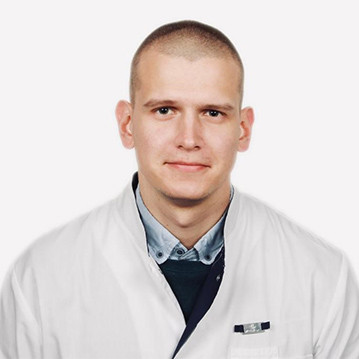
Zhao Alexey Vladimirovich
Experience 43 years
Make an appointment
Zhao
Alexey Vladimirovich
Chief physician of the network
Udin Oleg Ivanovich
Experience 32 years
Make an appointment
Udin
Oleg Ivanovich
Deputy chief physician for surgery, surgeon
Korolev Sergei Vladimirovich
Experience 24 years
Make an appointment
Korolev
Sergei Vladimirovich
Deputy chief physician for medical affairs, surgeon, oncologist
Shapovalyants Sergei Georgievich
Experience 51 year
Make an appointment
Shapovalyants
Sergei Georgievich
Chief Consultant in Surgery, Surgeon
Tsvetkov Vitaly Olegovich
Experience 40 years
Make an appointment
Tsvetkov
Vitaly Olegovich
Surgeon
Maltsev Andrew Vladimirovich
Experience 18 years
Make an appointment
Maltsev
Andrew Vladimirovich
Surgeon, plastic surgeon
Malygin Sergey Evgenyevich
Experience 31 year
Make an appointment
Malygin
Sergey Evgenyevich
Oncologist-mammologist, surgeon
Shabrin Alexei Valerevich
Experience 19 years
Make an appointment
Shabrin
Alexei Valerevich
Surgeon
Kovylov Aleksey Olegovich
Experience 20 years
Make an appointment
Kovylov
Aleksey Olegovich
Specialist in wounds and wound infections, diabetic foot doctor
Kim Ilya Viktorovich
Experience 27 years
Make an appointment
Kim
Ilya Viktorovich
Surgeon
Kuzavleva Elena Igorevna
Experience 19 years
Make an appointment
Kuzavleva
Elena Igorevna
Endocrine surgeon
Lysenko Andrey Olegovich
Experience 10 years
Make an appointment
Lysenko
Andrey Olegovich
Surgeon on duty
Ivanchik Inga Yakovlevna
Experience 20 years
Make an appointment
Ivanchik
Inga Yakovlevna
Surgeon, phlebologist
Shpilevoy Nikolay Yurievich
Experience 20 years
Make an appointment
Shpilevoy
Nikolay Yurievich
Cardiovascular surgeon, surgeon, ultrasound specialist
Gontarenko Vladimir Nikolaevich
Experience 24 years
Make an appointment
Gontarenko
Vladimir Nikolaevich
Angiosurgeon
Volenko Ivan Alexandrovich
Experience 15 years
Make an appointment
Volenko
Ivan Alexandrovich
Surgeon-oncologist-mammologist, plastic surgeon
Kushkin Ilya Olegovich
Experience 7 years
Make an appointment
Kushkin
Ilya Olegovich
Surgeon
Natalinov Ruslan Viktorovich
Experience 15 years
Make an appointment
Natalinov
Ruslan Viktorovich
Surgeon, ultrasound diagnostics doctor
Blinov Dmitry Alexandrovich
Experience 15 years
Make an appointment
Blinov
Dmitry Alexandrovich
Oncologist
Adyrkhaev Zaurbek Akhsarbekovich
Experience 17 years
Make an appointment
Adyrkhaev
Zaurbek Akhsarbekovich
Vascular surgeon
Nikitina Nina Mikhailovna
Experience 12 years
Make an appointment
Nikitina
Nina Mikhailovna
Surgeon, thoracic surgeon
Hakopyan Artashes Aramovich
Experience 20 years
Make an appointment
Hakopyan
Artashes Aramovich
Oncologist, surgeon
Grechin Anton Ivanovich
Experience 8 years
Make an appointment
Grechin
Anton Ivanovich
Surgeon
Magdiev Arslan Khulatdaevich
Experience 14 years
Make an appointment
Magdiev
Arslan Khulatdaevich
Surgeon, oncologist, phlebologist
No Specify
Experience 11 years
Make an appointment
Samara
Maxim
Surgeon
Iluridze Georgy Davidovich
Experience 9 years
Make an appointment
Iluridze
Georgy Davidovich
Oncologist, traumatologist-orthopedist, surgeon
Andreev Alexey Olegovich
Experience 16 years
Make an appointment
Andreev
Alexey Olegovich
Surgeon
Chukumov Rinat Maratovich
Experience 32 years
Make an appointment
Chukumov
Rinat Maratovich
Maxillofacial surgeon
Balkarov Beslan Khasenovich
Experience 17 years
Make an appointment
Balkarov
Beslan Khasenovich
Surgeon, oncologist
Melkonyan Lia Eduardovna
Experience 13 years
Make an appointment
Melkonyan
Lia Eduardovna
Oncologist, oncologist-mammologist, surgeon, radiologist, ultrasound diagnostician
Okhotin Viktor Viktorovich
Experience 18 years
Make an appointment
Okhotin
Viktor Viktorovich
Oncologist-mammologist, ultrasound diagnostician
All specialists
2GIS Award
2GIS Award

This award is given to clinics with the highest ratings according to user ratings, a large number of requests from this site, and in the absence of critical violations.

«Good place» according to Yandex

This award is given to clinics with the highest ratings according to user ratings. It means that the place is known, loved, and definitely worth visiting.

Our doctors are laureates of the ProDoctors Award

The ProDoctors portal collected 500 thousand reviews, compiled a rating of doctors based on them and awarded the best. We are proud that our doctors are among those awarded.

Make an appointment at a convenient time on the nearest date

Price

Reception
Price
Primary surgeon's appointment
from 5 460 ₽
Repeated appointment with a surgeon
from 5 460 ₽

Other services

Abdominal surgery AV heart block Adrenal adenoma Arthroscopy of the knee joint Bariatric surgery Bariatrics Nott's disease (trigger finger) Inflammation of the salivary glands (sialadenitis) Home visit Rectal prolapse (prolapse of the rectum) Gonarthrosis (osteoarthrosis of the knee joint) Diagnosis and treatment of hernia of the white line of the abdomen Treatment of TMJ (temporomandibular joint) dysfunction Benign soft tissue neoplasms Gallstone disease (cholelithiasis) Knee replacement Interventional radiology Correction of the nasal septum Treatment of coronary heart disease (CHD) Compression fracture of the spine Consultation with a vascular surgeon Laparoscopic hysterectomy (removal of the uterus) Laparoscopic surgery Treatment of anal fissures Treatment of ovarian apoplexy (rupture) Treatment of Graves' disease (diffuse toxic goiter) Ingrown toenail removal Treatment of hidradenitis suppurativa under the arm Treatment of spinal hernia Treatment of intestinal obstruction Treatment of dupuytren's contracture Morton's neuroma treatment Treatment of uterine prolapse Treatment of felon Treatment of femoral neck fracture Treatment of perforated gastric ulcer Лечение птоза верхнего века Treatment of heel spurs Treatment of endometrioid ovarian cysts Minimally invasive proctology Eye microsurgery Neurosurgery: what does a neurosurgeon treat? Emergency surgery Circumcision General surgery Oncosurgery Gallbladder surgery Thyroid surgery Операция паховой грыжи Prostate adenoma removal surgery Surgery to remove veins for varicose veins Esophageal Hernia Removal Surgery Inguinal Hernia Surgery for Men Surgery for varicocele Surgery for a torn meniscus in the knee joint Carpal Tunnel Syndrome Surgery Whipple’s procedure Pancreatic necrosis (necrosis of the pancreas) Appointment with a proctologist in Moscow Gastric resection is a surgery to reduce the stomach size for weight loss Septoplasty is a surgery to correct the nasal septum. Vascular surgery Spinal stenosis Stenosing atherosclerosis of the brachiocephalic arteries Stenting of the heart vessels (coronary arteries) Puncture (biopsy) of the thyroid gland Thoracic surgery in Moscow Thoracoscopic surgery Pulmonary embolism Breast augmentation surgery with implants Removal of anal fringes Removal of atheroma Wart removal Hemorrhoid removal: a complete guide to surgeries and methods Removal of hygroma Gallbladder removal (cholecystectomy) Bartholin's gland cyst removal Removal of bunions on the feet (surgery) Lipoma (wen) removal Removal (extirpation) of the uterus - hysterectomy Removal of papillomas Removal of polyp in the uterus Umbilical hernia removal Mole removal Removal of a rectal fistula Thyroid nodule removal Removal of fibroadenoma of the mammary gland Removal of a boil Removal of Hallux Valgus (Bone on the Foot) Chalazion removal Removal of the thyroid gland (thyroidectomy) Installation and removal of a stent in the ureter Fibrocystic mastopathy of the mammary glands Surgical gynecology Surgical cardiology Surgical coloproctology Surgical mammology Surgical otolaryngology Surgical dentistry Surgical traumatology Surgical urology Surgical treatment Surgical treatment of hernias Fast track surgery Maxillofacial surgery Lump on the labia Gastric bypass Emergency hospitalization Endovascular surgery Hip replacement Epithelial coccygeal tract: treatment, removal surgery (excision) Barley on the eye
Make an appointment

Appointment to the doctor

Fill out the form, our managers will contact you within 15 minutes

Reviews

I'd like to thank surgeon Samara M. for his exceptional professionalism and truly skilled hands. The removal of the sebaceous cyst behind my earlobe was quick, gentle, and completely calm. I was especially impressed by how simply and clearly he explained everything—my anxiety immediately disappeared, and I felt confident that everything would be fine. Thank you for your skill and compassion!
12.01.2026
Anatoly

About doctor:

Samara Maxim

The appointment went very well. The doctor bandaged the wound. I received the care I needed. The specialist was attentive and friendly.
12.01.2026
Olga

About doctor:

Samara Maxim

Good and responsive doctor!
29.12.2025
S. Irina Viktorovna

About doctor:

Melkonyan Lia Eduardovna

CIRCUMSTANCES AND ATTENTION OF A SPECIALIST
20.12.2025
T. Elena Mikhailovna

About doctor:

Ivanchik Inga Yakovlevna

A very good, responsive and competent doctor! ☀️
09.12.2025
S. Tatyana Vladimirovna

About doctor:

Melkonyan Lia Eduardovna

I was very pleased with the doctor’s professionalism!
03.12.2025
S. Maria Yuryevna

About doctor:

Melkonyan Lia Eduardovna

I consulted a surgeon in Samara. I had an abscess that was really bothering me. I specifically chose this doctor because I read that he was a specialist in the removal of tumors and purulent surgery with extensive experience. During the appointment, the doctor incised and cleaned the abscess. My main impression from the appointment was complete trust. The surgery was completely painless, although I was very nervous. I want to highlight the doctor's many strengths: his high level of professionalism, amazing precision in his work, and his attentive attitude towards the patient. He explained everything in detail, constantly inquired about my well-being, and maintained a calm and trusting atmosphere. I did not notice any drawbacks. The result exceeded expectations: the wound healed very quickly and without complications. The treatment was completely successful. A huge thank you to the doctor for his skillful hands, sensitivity, and the confidence he gives his patients!
01.12.2025
Anna

About doctor:

Samara Maxim

The doctor was very professional in treating this lesion. Compared to a similar operation I had in Nanjing in 2022, this time everything went better.
29.11.2025
L. Chengting
Attentive, friendly, clear language. Thank you.
29.11.2025
R. Olga Ivanovna

About doctor:

Ivanchik Inga Yakovlevna

I express my sincere gratitude to surgeon Samara Maxim for the surgery (lipoma removal) and professional treatment. The recommendations before the surgery and during the recovery period were clear and understandable!
27.11.2025
Julia A.

About doctor:

Samara Maxim

Почему К+31?
К + 31 — full-cycle multidisciplinary medical centers, including the possibility of providing medical services of European quality level.
К + 31 — are leading doctors and diagnostics using high-tech equipment from world manufacturers (Karl Storz, Olympus, Siemens, Toshiba, Bausch&Lomb, Technolas, Zeiss, Topcon).
К + 31 — is ethical. The staff of K+31 clinics maintain open relationships with patients and partners. An individual approach to each patient is the basis of our service standards.
К + 31 — is modernity. On call 24/7: call center operators will answer your questions at any time and book you an appointment with doctors. Contact us by phone, through the feedback form on the website and Max.
Our clinics

K+31 on Lobachevskogo

st. Lobachevskogo, 42/4

+7 499 999-31-31

Subway
1
11
Prospect Vernadsky Station
By a car
Lobachevsky, we pass the first barrier (security post of the City Clinical Hospital No. 31), turn right at the second barrier (security post K+31)
Parking pass
Opening hours on holidays
30.12: 08:00—21:00

31.12: 09:00—18:00

01.01: 12:00—18:00

02.01—11.01: 09:00—18:00

K+31 Petrovskie Vorota

1st Kolobovsky pereulok, 4

74999993131

Subway
9
Tsvetnoy Bulvar
10
Trubnaya
By a car
Moving along Petrovsky Boulevard, turn onto st. Petrovka, right after - on the 1st Kolobovsky per. Municipal parking
Opening hours on holidays

30.12: 08:00—20:00

31.12—02.01: weekends

03.01: 10:00—18:00

04.01—06.01: 09:00—19:00

07.01: 10:00—18:00

08.01—11.01: 09:00—19:00

K+31 West

Orshanskaya, 16/2; Ak. Pavlova, 22

74999993131

Subway
3
Molodezhnaya
By a car
Moving along Orshanskaya street, we turn to the barrier with the guard post K+31. You do not need to order a pass, they will open it for you
Opening hours on holidays

31.12: 09:00—18:00

01.01: 12:00—18:00

02.01—09.01: 09:00—18:00

Didn't find the service you were looking for?

Экстренная помощь