
Ingrown toenail removal
An ingrown toenail is a common defect that occurs in both men and women at any age. Most often it occurs when wearing uncomfortable shoes, insufficient foot hygiene, or fungal infection of the nail. According to statistics, about 10% of the world's population faces this problem. Lack of timely treatment leads to serious complications, including gangrene and sepsis.

specialists

equipment

treatment

Reasons for the development of onychocryptosis
Among the most common causes of ingrown toenails are:
- Wearing shoes that are too narrow and squeeze your toes
- Abuse of high heels
- Curvated or incorrectly positioned toes
- Wearing a cast or tight bandage for a long time
- Cutting the nail too deep
- Congenital pathology of the foot, leading to uneven distribution of the load
- Diabetes
- Rheumatoid lesions of the finger joints
- Flat feet
- Pregnancy, excess weight
Epidermal growth factor receptor inhibitors also lead to onychocryptosis. A side effect of such medications may be inflammation of the periungual fold, What causes ingrown toenails?
Ingrown nails develop gradually. The patient may initially experience mild discomfort. Ignoring the problem then leads to serious changes in the shape of the nail plate.
According to Muratov's classification, this process is divided into four stages:
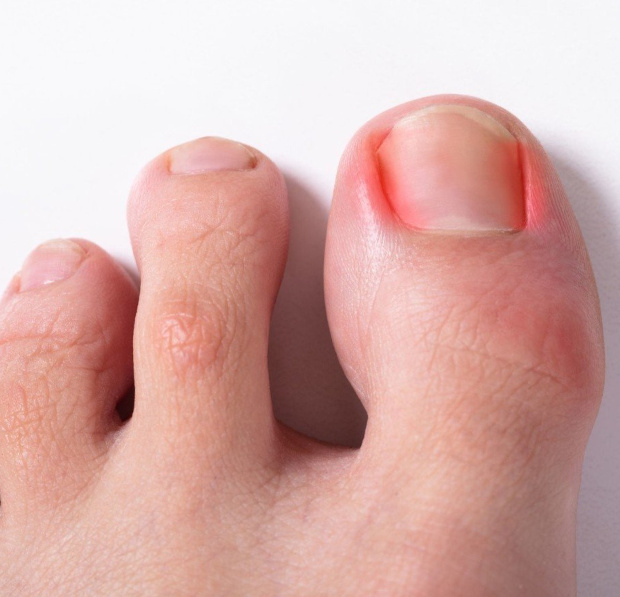
- In the first stage, the nail only begins to slightly grow into the lateral fold. Discomfort when walking, redness, and subtle pain appear. Externally, the changes are virtually imperceptible.
- The second stage is characterized by increased pain, especially in closed shoes. The edge of the nail plate penetrates deeper into the soft tissue, swelling, and moderate inflammation occur. The fold may change color to a purple-blue color.
- In the third stage, swelling intensifies, and purulent inflammation develops. The edges of the nail bed begin to deform, and movement becomes painful even without pressure. The nail surface may become curved.
- Stage four: severe ingrowth with severe inflammation. A dense granulation ridge forms, deforming the entire nail plate. The pain becomes throbbing and constant. The risk of abscess and tissue infection increases.
Timely treatment at any stage allows you to avoid surgery and maintain the proper shape of the nail plate.
Disease classification
In 1972, renowned physician D. I. Muratov proposed a classification of disease severity:
- First. Mild discomfort in the nail area with moderate swelling and redness.
- Second. Thickening and change in shape of the nail, increasing the angle of ingrown nail to 30 degrees.
- Third. The nail becomes very thick and deeply ingrows into the soft tissue, forming a tower-shaped nail with an ingrown nail angle of up to 45 degrees.
- Fourth. Significant thickening of the nail and its deformation into a horn or claw. Accompanied by trophic changes in the matrix and surrounding tissue.
Understanding the mechanism of ingrown nail development allows the doctor to choose the right treatment methods and prevent recurrence.
Symptoms and diagnosis
Symptoms of an ingrown toenail include:
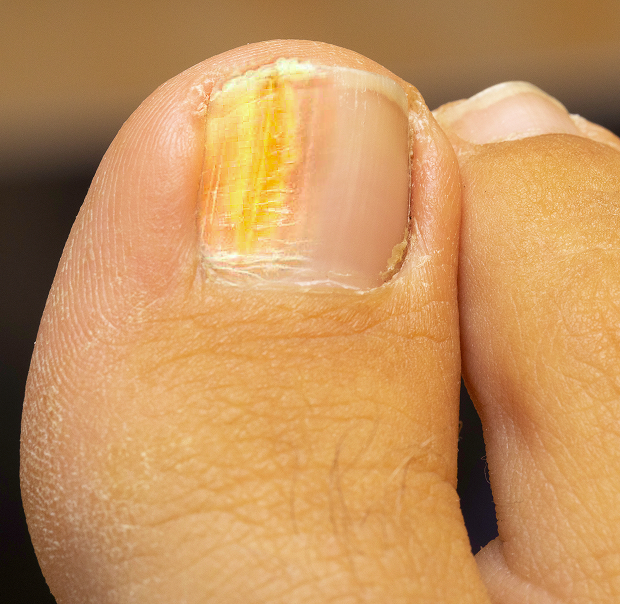
- Pain and discomfort in the affected nail area
- Redness
- Swelling around the nail
- Purulent discharge from under the nail, indicating infection
- Granulations or "fleshy growths" around the nail, indicating chronic inflammation
To confirm the diagnosis and rule out problems such as bone infections or fractures, a visual examination of the affected area and a medical history are performed. If fungal infection is suspected, a scraping is taken. In some cases, a foot X-ray is required.
Indications for removal of ingrown toenails
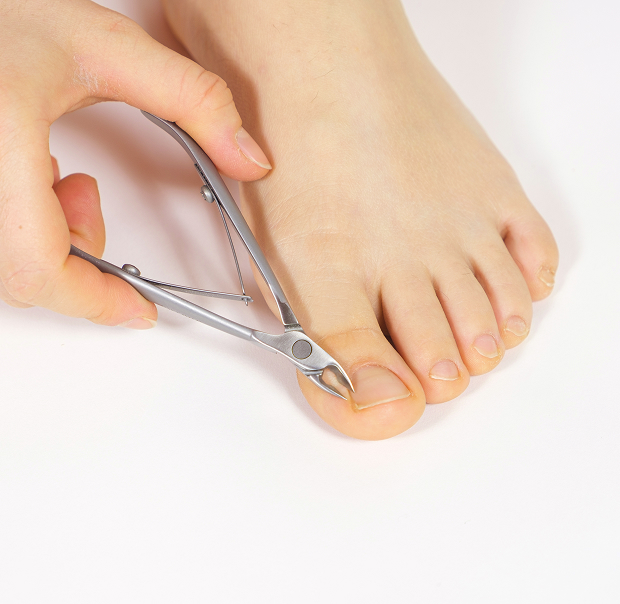
Removal of an ingrown toenail is not always prescribed. A doctor makes this decision when other treatments fail and the condition worsens. Ignoring the problem can lead to serious complications, including chronic inflammation and deformation of the nail plate.
Main indications for the procedure:
- Frequent recurring ingrowth, regardless of footwear and hygiene
- Acute inflammation with swelling and pain
- Formation of pus and granulation tissue
- Ineffectiveness of conservative treatment
- Presence of a fungal infection that alters the nail structure
- Deformation of the nail bed that interferes with normal nail growth
The choice of intervention depends on the severity of the process and the anatomical features. Each case is assessed individually, with the doctor selecting the appropriate approach. In complex situations, surgery is the only way to preserve the nail's health and prevent recurrence.
Treatment Methods
The course of treatment for an ingrown toenail in a clinic depends on the severity and may include several methods.
The healing process usually takes about one month, and full regrowth of the nail plate takes up to three months.

Conservative. In the initial stages of onychocryptosis, antiseptics, therapeutic baths, compresses, plasters, threads, and silicone inserts are prescribed.

Minimally invasive procedures. Laser treatment, radio wave therapy, cryodestruction.

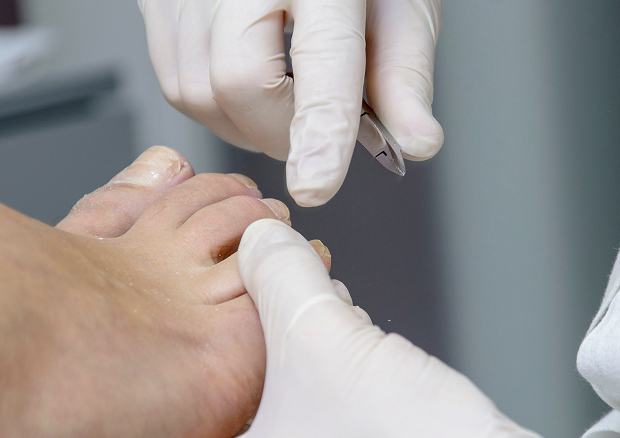
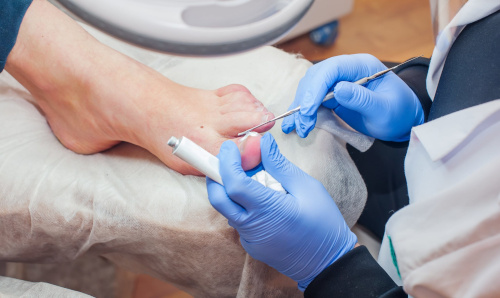
Surgical treatment of ingrown toenails. In complex cases, part or all of the nail is removed under local anesthesia.














































What is an ingrown toenail
An ingrown nail, or onychocryptosis, is a pathological condition in which the edge of the nail plate penetrates the soft tissue around the nail, causing swelling, redness and pain. It mainly occurs on the big toe. Particularly susceptible to the development of onychocryptosis people with flat feet and hallux valgus.
At the first sign of a problem, you should contact a surgeon or podiatrist. Professional treatment for ingrown toenails helps relieve pain and prevent unpleasant consequences.