
Palliative care for severe Parkinson's disease
When Parkinson's disease progresses to a severe stage, families face more than just tremors and stiffness. The patient's speech, mood, and memory also change. The patient is unable to care for themselves and becomes dependent on the care of loved ones. And it is at this point that it is important to understand: palliative care is not the end of treatment, but the next stage of support.
Palliative care for Parkinson's disease is aimed at relieving symptoms, maintaining dignity, and supporting the patient's highest possible quality of life.

specialists

equipment

treatment






Tasks of palliative care
When it comes to stages 4–5, it's important not only to continue taking medications that affect dopamine, but also to review the entire support plan.
Palliative care for Parkinson's also includes neurological treatment: a speech therapist, nutritionist, psychologist, and rehabilitation specialists are involved.
Relief of non-motor symptoms and pain
With severe stiffness and spasms, muscles often ache. This is often accompanied by poor sleep, anxiety, and depression.
Palliative care for Parkinson's involves adjusting medication regimens, mild analgesics, and working with sleep patterns. This helps reduce stress and maintain communication with loved ones.
Prevention of complications (bedsores, pneumonia)
Severe immobility increases the risk of pressure ulcers and aspiration.
It's important to monitor the patient's skin: people who lie down frequently are more likely to develop pressure ulcers. Therefore, relatives should frequently turn the patient, clean folds, and change bed linens at least twice a week.
To reduce the risk of fluid retention in the lungs, elevate the patient in bed during feedings (place them in a semi-reclined position).
Organizing daily living and specialized nutrition
The home should be safe and predictable. The space should be adapted to the patient, their vision, and balance. If possible, add handrails along the walls, remove thresholds, and brighten the lighting.
Caring for patients with Parkinson's stage 5 is primarily about maintaining a routine. It's important to take medications on schedule, eat, and walk at the same time.

Swallowing difficulty (Dysphagia) and dietary adjustments
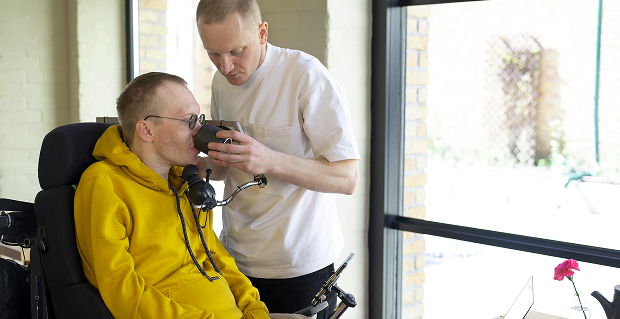
Swallowing difficulties in Parkinson's disease are a common problem in the later stages. Relatives may have to feed the patient, and this should be taken into account.
Food should be soft and smooth. If the patient is unable to eat much, consider introducing high-calorie shakes. However, consult a doctor before giving them.
If swallowing difficulties in Parkinson's disease worsen, a speech therapist should be consulted.
Safe Space and Rehabilitation Equipment
Canes, walkers, special chairs, and functional beds are not a sign of weakness, but rather safety tools.
Rehabilitation continues even in the later stages: light exercises help maintain mobility and slow the progression of contractures.
Psychological support for the patient and his family
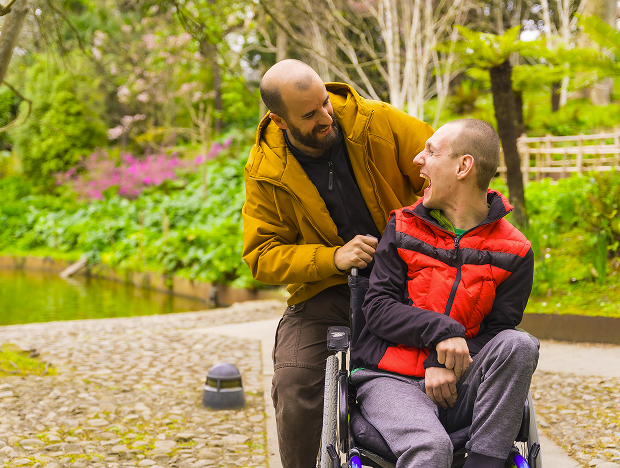
In severe cases, not only the body but also the psyche suffers. In moments of clear consciousness, a person may worry about losing their independence. Anxiety increases, and family relationships worsen with each passing day.
Palliative care for Parkinson's also involves working with a psychologist. The specialist helps maintain emotional connection and support social adaptation.
Coping with caregiver burnout
Caring for someone with stage 5 Parkinson's requires a lot of effort.
It's important to delegate responsibilities, take breaks, and not be embarrassed to ask for help. Psychological support for relatives reduces the risk of burnout and feelings of guilt.
When should you consider hospitalization in a palliative care unit?
| Parameter | Home care | Specialized department |
|---|---|---|
| Medical monitoring | Scheduled visits | 24/7 |
| Special equipment | Purchased separately | Provided by the clinic |
| Family psychological relief | Limited | Team support |
| Emergency therapy adjustments | On call doctor | Immediately |
Conclusion
Severe Parkinson's disease is a challenge for the entire family. But palliative care isn't about abandonment, it's about caring.
We don't just relieve symptoms; we restore the patient's ability to communicate with loved ones, relieving pain and fear. Even in the later stages, dignity and warmth can be maintained.

FAQ
Should levodopa be discontinued at a late stage?
Is it possible to care for the baby at home?
Does dementia always develop?
How long do patients with late-stage Parkinson's disease survive?
Is it possible to treat severe Parkinson's at home?
What is "off syndrome"?
Does palliative care help improve a patient's memory?



This award is given to clinics with the highest ratings according to user ratings, a large number of requests from this site, and in the absence of critical violations.

This award is given to clinics with the highest ratings according to user ratings. It means that the place is known, loved, and definitely worth visiting.

The ProDoctors portal collected 500 thousand reviews, compiled a rating of doctors based on them and awarded the best. We are proud that our doctors are among those awarded.
Make an appointment at a convenient time on the nearest date
Other services

Appointment to the doctor
Reviews




















Our clinics


Application “Personal Account K+31”












Features of the late stages of the disease (4 and 5 according to Hoehn-Yahr)
In simple terms, stages 4–5 on the Hoehn-Yahr scale indicate that a person has difficulty moving independently. At stage 4, they can still stand and walk, but only with support or the help of a loved one. At stage 5, a person often barely walks, spending most of their time lying down. At this stage, relatives need to understand that all daily responsibilities will fall on their shoulders.
Late-stage Parkinson's disease has pronounced symptoms:
Additionally, problems with memory and attention are observed, and dementia sometimes develops.
And it's important to remember: severe Parkinson's disease isn't just about external symptoms. A person experiences poor sleep, loss of appetite, and anxiety or depression.