
Inpatient Treatment for Concussions and Fractures
Trauma remains one of the leading causes of temporary disability and disability in the population. In cases of combined injuries, including skeletal damage and traumatic brain injury, the speed of qualified care is crucial.
An integrated approach in a 24-hour inpatient setting allows for the treatment of neurological disorders and rehabilitation of the musculoskeletal system in a single location, minimizing the risk of complications.

specialists

equipment

treatment



Diagnostic methods in the department
Inpatient treatment for trauma begins with an initial assessment using the Glasgow Coma Scale. The physician checks the patient's verbal, motor, and eye-opening responses. A score of 13-15 is classified as mild TBI.
Instrumental studies (CT, MRI, X-ray)
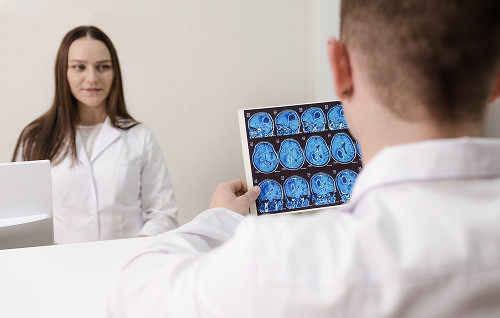
Modern TBI diagnostics rely on imaging techniques. Multislice computed tomography (MSCT) is considered the gold standard for head injuries, as it can detect hemorrhage, swelling, or bone damage in the head.
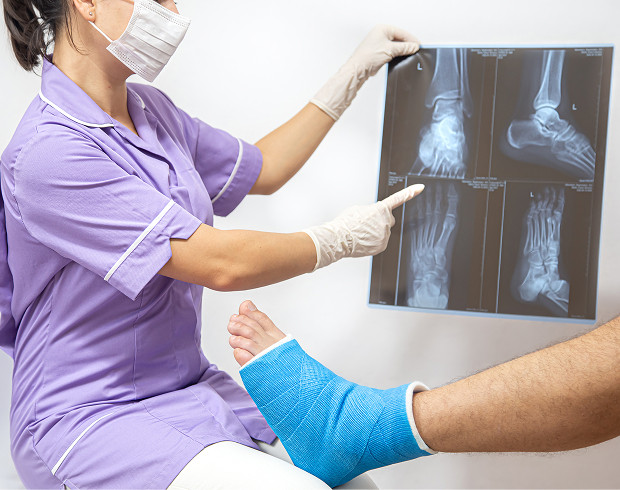
To assess the condition of the bones, X-rays are taken in several projections. If the fracture involves a joint or has a complex structure, the traumatologist will order a CT scan. MRI is an additional diagnostic method, primarily used to assess the condition of soft tissues and ligaments.
Laboratory tests and examination by specialized specialists
In the hospital, the patient is examined by a team of doctors, including:
- Neurologist: assesses reflexes, sensitivity, and consciousness
- Traumatologist: examines the arms and legs, checks the pulse in the peripheral vessels
- Neurosurgeon: needed for particularly severe brain injuries when conservative treatment is not possible
Upon admission to the hospital, general blood and urine tests, biochemistry, blood type and Rh factor are determined, and a coagulogram is performed to assess clotting before possible surgery.
Specifics of inpatient treatment

Hospital treatment for fractures is an opportunity to quickly restore joint mobility and return to normal life. The doctor's primary goal is to preserve sensation and ensure proper fracture healing.
Concussion Treatment (CTT)
Hospital treatment for concussion primarily involves bed rest. You should remain in bed for at least 3-5 days.
Treatment includes:
- Painkillers (analgesics)
- Sedatives to reduce excitability
- Medications that improve venous outflow
Surgical and Conservative Treatment of Fractures
If there is no displacement, doctors try to minimize the damage: the broken bone is immobilized with plaster casts or polymer plaster.
If a complex fracture with displaced fragments is diagnosed, surgery is performed: the bones are fixed with metal structures (plates, pins). After surgery, a long rehabilitation period is required.
Characteristics of Combined Injuries
Traumatic brain injury complicated by fractures of the extremities or pelvis requires special monitoring. In such cases, doctors ensure that medications for the treatment of brain injury do not interfere with anticoagulants, which are mandatory for fractures to prevent thrombosis. In severe cases, the patient is referred to the intensive care unit for monitoring of vital signs.
Length of hospital stay and regime
The length of hospitalization for a concussion is determined by the severity of the condition and the progress of recovery.
| Parameter | Concussion (mild TBI) | Brain contusion / Fracture (moderate/severe) |
|---|---|---|
| Hospital stay | 3–7 days | From 14 to 45 days |
| Regime | Strict bed rest (3 days) | Bed or ward (depending on the type of immobilization) |
| Monitoring | Daily neurologist examination | X-ray examination, traumatologist examination |
| Restrictions | Avoid screen time (TV, phone) | Limit weight-bearing on the injured area |

Rehabilitation after a fracture or TBI begins in the hospital ward and continues on an outpatient basis.
Stage One (Early Stage). Physical therapy in bed, breathing exercises, and physical therapy (magnetic therapy) to reduce swelling.
Stage Two. Gradually increase physical activity, sessions with a rehabilitation therapist to restore range of motion in the joints.
Stage Three. Formation of strong bone callus and full restoration of function. A neurologist may prescribe a course of nootropics and B vitamins.
Frequently Asked Questions
This information is for informational purposes only. If you have fallen and have signs of a fracture, call an ambulance or go to the emergency room yourself.
Can a concussion be treated at home?
How long does it take for a fracture to heal?
When can I return to sports after a TBI?
Our doctors









This award is given to clinics with the highest ratings according to user ratings, a large number of requests from this site, and in the absence of critical violations.

This award is given to clinics with the highest ratings according to user ratings. It means that the place is known, loved, and definitely worth visiting.

The ProDoctors portal collected 500 thousand reviews, compiled a rating of doctors based on them and awarded the best. We are proud that our doctors are among those awarded.
Make an appointment at a convenient time on the nearest date
Other services

Appointment to the doctor
Reviews





Our clinics


Application “Personal Account K+31”












Indications for emergency hospitalization in case of injuries
A concussion (CCM), according to ICD-10 (code S06.0), is classified as a mild traumatic brain injury. However, hospital observation is recommended for the first 24–48 hours due to the risk of delayed hematoma or cerebral edema.
Immediate hospitalization for a concussion and suspected fractures is required if the following symptoms are present:
These are indirect symptoms of a concussion. A diagnosis is made only if there has been a traumatic brain injury. However, visible skull deformation is not always present.