Inpatient Treatment of Pyelonephritis: When Hospitalization is Necessary and How is Treatment Administered?

Pyelonephritis is an inflammation of the kidneys, affecting the renal pelvis, calyces, and parenchyma. The insidious nature of this disease lies in its rapid progression: yesterday you simply had lower back pain, and today you have a fever.

Inpatient treatment for pyelonephritis is best. There, the cause of the inflammation can be quickly identified, the antibiotic that works, and the source of infection can be completely eliminated.

A comprehensive inpatient approach reduces treatment time by half compared to outpatient treatment.

Best specialists
Best
specialists
Expert equipment
Expert
equipment
Advanced diagnostic treatment
Advanced diagnostic
treatment
Sign up
Fill out the entry form on the page and we will call you back
Sign up Позвонить
Download the application “Personal Account K+31”
Everything about your health in one click!
Subscribe to social networks K+31
To keep up to date with current offers and receive useful advice about your health.

Advantages of inpatient treatment over home treatment

Many patients choose to be treated at home, underestimating the risks. However, kidney treatment in a hospital is fundamentally different in the quality and speed of care.

Advantages of inpatient care:

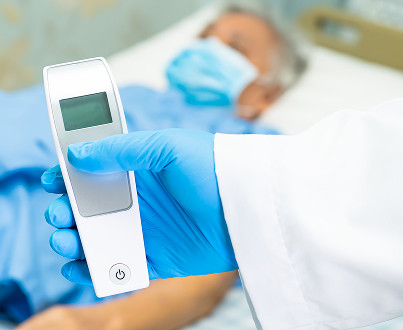
  • You are under constant supervision: hospital staff monitors your temperature, blood pressure, and urine output.
  • Medications are administered through injections or IVs: this way they act faster and are gentle on the stomach.
  • A quick ultrasound is available: this is necessary when treatment is ineffective or the patient's condition worsens.

The inpatient environment is calmer. You don't have to worry about work, everyday problems, or look for an appointment with a doctor.

Comparison criteria Home treatment Inpatient treatment
Dosage form Mainly tablets Injections and IV drips (intravenous)
Monitoring of blood tests Once every 7-10 days Daily or every other day
Risk of complications High (due to delayed diagnosis) Minimal (under medical supervision)
Pain relief rate Low High (infusion therapy)
Advantages of inpatient treatment over home treatment

Stages of diagnostics in the emergency room and department

Upon admission, the patient is first examined by a urologist or nephrologist. A thorough history and examination are conducted. Laboratory and instrumental diagnostics are key.

Not all stones are visible on ultrasound, so if the patient's condition does not improve, a CT scan is performed.

When registering for hospitalization:

  • They take blood and urine samples
  • They do a urine culture and test the sensitivity of the bacteria found to antibiotics
  • They perform an ultrasound to check for stones

Treatment methods in a hospital setting

The department uses complex therapy aimed at eliminating infection, reducing inflammation, and cleansing the body of toxins.

Antibacterial and Detoxification Therapy

The basis of treatment is a course of intravenous antibiotics. In hospitals, modern broad-spectrum medications are used: third- and fourth-generation cephalosporins, as well as fluoroquinolones. After receiving urine culture results, the doctor can adjust the therapy, selecting the most effective, specialized antibiotic.

Infusion therapy is administered concurrently. Intravenous saline solutions help flush the kidneys, reduce the concentration of bacterial toxins in the blood, and eliminate dehydration. Additionally, uroseptics are prescribed—medications that accumulate in the urinary tract and enhance the effect of antibiotics.

Pain relief and restoration of urine flow

Anspasmodics and nonsteroidal anti-inflammatory drugs (NSAIDs) are used for pain relief. If the inflammation is caused by a urinary obstruction (for example, a stone blocking the ureter), bladder catheterization or placement of a special stent in the ureter to drain the kidney may be necessary.
How many days does hospitalization last for pyelonephritis?

How many days does hospitalization last for pyelonephritis?

How long does a patient with pyelonephritis stay in the hospital? This varies from patient to patient. Some patients are discharged immediately after pain relief, while others prefer to undergo a course of antibiotics in the hospital. Discharge is possible only after a stable temperature recovery (at least 3 days without fever) and positive urine and blood test results. If the disease is severe, the hospital stay may be extended to 21 days.

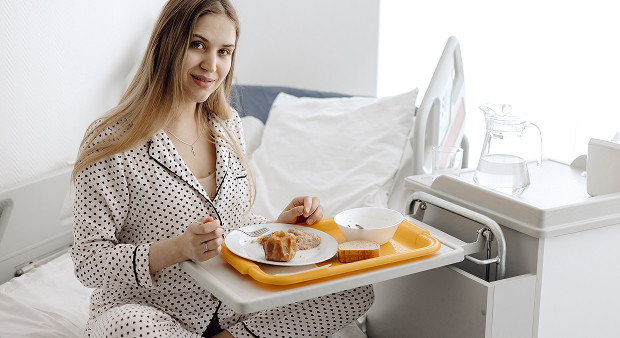
Diet and Fluid Regimen (Diet No. 7)

Diet plays an important role in kidney inflammation. In hospitals, Diet No. 7 is used. Its main principles are:

  • Minimal salt intake (up to 2-3 grams per day)
  • No spicy, salty, or smoked foods
  • Protein restriction during the acute phase

As surprising as it may sound, with kidney disease you need to drink more: up to 2-2.5 liters of water, cranberry, or lingonberry juice. However, this is possible as long as there is no urinary retention or swelling.
Possible complications if you refuse hospitalization

Treating at home without a diagnosis can have serious consequences, such as:

  • Paranephritis: inflammation progresses to cancer
  • Abscess or carbuncle of the kidney: pus that can lead to kidney loss
  • Urosepsis: bacteria enter the bloodstream, which poses a threat to the entire body

Taking antibiotics haphazardly can lead to chronic illness: pain will return repeatedly when exposed to cold. Ultimately, the kidney may deteriorate, leading to kidney removal.

Frequently Asked Questions

Can pyelonephritis be cured without antibiotics?

No. It's a bacterial infection, and recovery is impossible without eradicating the pathogen.

Is a diet necessary after discharge?

Yes, you should reduce your salt intake and eliminate unhealthy foods. Prioritize boiled or stewed foods. This diet should be followed for three months.

How do you know if the treatment is working?

The first signs include a decrease in temperature within 2-3 days of treatment and a reduction in lower back pain. However, you must not stop taking antibiotics, otherwise the bacteria will develop resistance to the therapy.

Our doctors

Khailova Maria Sergeevna
Experience 5 years
Make an appointment
Khailova
Maria Sergeevna
Oncologist
Biryuk Ekaterina Sergeevna
Experience 7 years
Make an appointment
Biryuk
Ekaterina Sergeevna
Rheumatologist, therapist, specialist in ultrasound diagnostics of joints
Dubrovskaya Tatyana Igorevna
Experience 10 years
Make an appointment
Dubrovskaya
Tatyana Igorevna
Leading endocrinologist, nutritionist, therapist
Shegay Daria Sergeevna
Experience 6 years
Make an appointment
Shegay
Daria Sergeevna
General practitioner
Alekseev Roman Andreevich
Experience 9 years
Make an appointment
Alekseev
Roman Andreevich
Head of the admissions department, cardiologist, general practitioner
Galaeva Lolita Movlat-girievna
Experience 4 years
Make an appointment
Galaeva
Lolita Movlat-girievna
Cardiologist-therapist, on duty
All specialists
2GIS Award
2GIS Award

This award is given to clinics with the highest ratings according to user ratings, a large number of requests from this site, and in the absence of critical violations.

«Good place» according to Yandex

This award is given to clinics with the highest ratings according to user ratings. It means that the place is known, loved, and definitely worth visiting.

Our doctors are laureates of the ProDoctors Award

The ProDoctors portal collected 500 thousand reviews, compiled a rating of doctors based on them and awarded the best. We are proud that our doctors are among those awarded.

Make an appointment at a convenient time on the nearest date

Other services

Comprehensive treatment of cholecystitis in a hospital setting Rheumatoid arthritis: when hospital treatment is necessary Effective inpatient treatment of arthrosis: when is hospitalization necessary Inpatient treatment for Crohn's disease: when hospitalization is needed and how therapy is performed Inpatient pneumonia treatment: when hospitalization is necessary and how therapy is performed Renal colic: how is it treated in a hospital setting? Inpatient Stroke Treatment: From Intensive Care to Recovery Treatment of jaundice and liver diseases in hospital Inpatient treatment for myocardial infarction: how to save the heart Comprehensive treatment of gout in a hospital Treatment of fever in a hospital setting Treatment of uterine fibroids with bleeding in a hospital setting Inpatient treatment of pregnancy complications: types of pathologies and methods of assistance Features and benefits of inpatient polyneuropathy treatment Inpatient treatment of bowel diseases: when hospitalization is necessary Effective treatment of poisoning in hospital Treatment of appendicitis in a hospital setting Inpatient treatment for concussion and fractures Inpatient cataract treatment: when hospitalization is necessary and how the surgery is performed Inpatient treatment for intervertebral disc herniation and protrusions Treatment of enuresis in a hospital setting Effective treatment of visual impairments in a hospital setting Encephalitis and borreliosis: features of inpatient treatment Inpatient treatment of pancreatitis: main methods and stages of therapy Effective treatment of cardiomyopathy in a hospital setting Meningitis Treatment in Hospital: Why Hospitalization is Mandatory Heart rhythm disturbances: when hospital treatment is necessary Treatment of convulsive syndrome in hospital
Make an appointment

Appointment to the doctor

Fill out the form, our managers will contact you within 15 minutes

Reviews

Darya Sergeyevna is a very nice and positive expert!
25.03.2026
T. Darya Gennadevna

About doctor:

Shegay Daria Sergeevna

Very pleasant to talk to. Very attentive.
18.02.2026
K. Alfiya Mukhamedovna
This was my first time with this doctor, and I highly recommend him for his attentiveness and professionalism. Thanks to the Clinic for such specialists.
10.12.2025
G. Yulia Gennadievna
Excellent doctor. My visit left me with nothing but positive impressions. His professionalism is top-notch!
18.11.2025
V. Ekaterina Yuryevna
She's a wonderful doctor, attentive, kind, and a true professional. I've been seeing her for several years now. She helped me lose a lot of weight and brought my blood sugar levels back to normal. Thank you, Tatyana Igorevna!
06.11.2025
K. Maria Gennadievna
I really enjoyed working with the doctor!
08.09.2025
T. Dmitry Valerievich
Thank you for the reception. Tatyana Igorevna answered all my questions very politely, clearly and in detail.
03.09.2025
Sh. Vlada Vladimirovna
Ценю комфорт и стараюсь экономить своё время, поэтому уже почти год наблюдаюсь в клинике К+31. Работают ежедневно, и всегда можно подобрать удобное время для приёма. Оборудование новейшее, так что в результатах нет сомнений. Весь персонал клиники всегда отзывчив и добродушен, что для меня очень важно. Хотела бы выразить отдельную благодарность врачу-онкологу Кузнецовой Юлии Владимировне за профессионализм в разработке схемы обследования.
08.03.2025
Татьяна Т.
Юлия Владимировна Кузнецова оказалась очень внимательным специалистом. Она спокойно и подробно объяснила мне методы лечения и необходимые процедуры. В процессе лечения возникали некоторые сложности, но доктор всегда находила способы их решения без лишних комментариев и нареканий. В целом, я полностью доволен её профессиональным подходом.
06.03.2025
Роман К.
Мне очень понравилось общение с врачом-онкологом Кузнецовой Юлией Владимировной. Она не назначает мне лишние таблетки, если в этом нет необходимости. Когда я захожу в её кабинет, она всегда улыбается, и я тоже ухожу с улыбкой. Юлия Владимировна объясняет, что моё заболевание не страшное и не смертельное, и что всё будет хорошо. Её оптимизм и вера в благоприятный исход лечения для меня очень важны. Когда мы, пациенты, приходим к врачу, испытываем страх и неопределённость, именно такое отношение – понимание, внимание, лечение и настрой на хороший результат – нам и нужно. Я не посетила много врачей, но мне есть с кем сравнить, и я с уверенностью могу рекомендовать именно Кузнецову Юлию Владимировну.
20.01.2025
Татьяна С.
Почему К+31?
К + 31 — full-cycle multidisciplinary medical centers, including the possibility of providing medical services of European quality level.
К + 31 — are leading doctors and diagnostics using high-tech equipment from world manufacturers (Karl Storz, Olympus, Siemens, Toshiba, Bausch&Lomb, Technolas, Zeiss, Topcon).
К + 31 — is ethical. The staff of K+31 clinics maintain open relationships with patients and partners. An individual approach to each patient is the basis of our service standards.
К + 31 — is modernity. On call 24/7: call center operators will answer your questions at any time and book you an appointment with doctors. Contact us by phone, through the feedback form on the website and Max.

Our clinics

K+31 West

Orshanskaya, 16/2; Ak. Pavlova, 22

74999993131

Subway
3
Molodezhnaya
By a car
Moving along Orshanskaya street, we turn to the barrier with the guard post K+31. You do not need to order a pass, they will open it for you
Opening hours
Mon-Fri: 08:00 – 21:00
Sat-Sun: 09:00 – 18:00
Didn't find the service you were looking for?

Экстренная помощь