Chickenpox Treatment in Children

The doctors at the K+31 Medical Center provide qualified care to young patients with the acute viral infection known as chickenpox in children, regardless of the form and severity of symptoms. We use modern, evidence-based approaches and adhere to current clinical guidelines from the Russian Ministry of Health.

Our treatment programs for young patients are aimed not only at relieving unpleasant symptoms but also at preventing complications, accelerating recovery, and ensuring competent infection control under the supervision of a pediatrician and infectious disease specialist.

Best
specialists
Expert
equipment
Advanced diagnostic
treatment
Sign up
Fill out the entry form on the page and we will call you back
Sign up Позвонить
Download the application “Personal Account K+31”
Everything about your health in one click!
Subscribe to social networks K+31
To keep up to date with current offers and receive useful advice about your health.

What is chickenpox in children?

Chickenpox is an acute disease caused by the Varicella Zoster virus, a member of the herpesvirus family. The pathogen is transmitted primarily by airborne droplets. The clinical picture is characterized by a vesicular skin rash, intermittent fever, itching, and signs of intoxication. The disease most often occurs in children, but episodes have also been reported in adolescents and adults, especially in those who lack immunity following vaccination or previous infection.

Most children have a benign course of the disease. However, children with a weakened immune response, chronic illnesses, or signs of a severe process require closer monitoring. At K+31, we thoroughly diagnose chickenpox in children, assess their overall condition, and develop an individualized treatment plan.

What is chickenpox in children?

The cause of chickenpox in children

The etiologic agent is Varicella Zoster. This is one of the most contagious viruses: infection is likely through close contact in the overwhelming majority of cases. After penetrating the mucous membranes of the upper respiratory tract, the pathogen spreads lymphohematogenously and attacks epidermal cells, leading to:

  • Vesicle formation
  • Fever
  • Itching

The greatest number of cases is recorded in organized settings: kindergartens, schools, and sports clubs. The peak age is approximately 2–10 years. In infants (in the presence of maternal antibodies) and adolescents over 14, the course of the disease may differ: in the former, it is milder, while in the latter, it often involves severe intoxication and a profuse rash.

How does infection occur and the incubation period?
Our specialists remind you that this infection is extremely contagious. Air currents in a room easily carry aerosols over significant distances. In organized groups, a single episode is enough to infect almost all non-immune children.

How can you become infected with chickenpox?

The primary route is airborne. Infection is possible through talking, coughing, and sneezing. The pathogen can travel with air currents, which explains family and group outbreaks. After penetrating the mucous membranes, the virus enters the bloodstream and then the skin, where vesicles form.

A child becomes contagious 1-2 days before the rash appears and remains infectious until the last scab falls off. Therefore, isolation and notification of a pediatrician are recommended.

Incubation Period and Contagiousness of Chickenpox

The period from exposure to the first symptoms is 10–21 days (usually about two weeks). The highest contagiousness occurs during the first 5 days after the rash appears. The risk of transmission decreases thereafter.

After infection, long-lasting protection develops. Recurrences are rare, but Varicella Zoster can persist in nerve ganglia and manifest as shingles years later.

Chickenpox Treatment in Children

In K+31, the patient management program is tailored individually based on age, clinical presentation, and associated factors. The goals are to alleviate symptoms, prevent complications, and reduce the risk of transmission to others.

Methods and stages of treatment

Most children are treated at home under the supervision of a pediatrician. Hospitalization is indicated for severe cases, high fever, complications, or a weakened immune system. Key components:

  1. Antipyretic therapy: paracetamol/ibuprofen at temperatures > 38°C; Aspirin is contraindicated in children (risk of Reye's syndrome).
  2. Skin care - gentle antiseptic treatment of affected areas (as prescribed by a doctor) to prevent secondary bacterial growth.
  3. Itching control - antihistamines, cool air baths, light cotton clothing.
  4. Regimen and hydration - adequate fluid intake, a gentle diet, normal sleep.
  5. Monitoring for complications - if signs of suppuration, difficulty breathing, or seizures appear, seek immediate medical attention.

Drug Therapy

Specific antiviral agents are not necessary for most children. In severe cases or in adolescents, acyclovir may be prescribed (most effective within the first 24-48 hours of the onset of the rash). Additionally, the following are used:

  • Antipyretics in age-appropriate doses
  • Antihistamines to reduce itching
  • Topical antiseptics for skin treatment
  • If indicated, supportive medications at the doctor's discretion

We adhere to the principles of evidence-based medicine: we exclude unnecessary prescriptions and focus on competent care and the prevention of complications.

Caring for Children with Chickenpox

Recommendations for Parents:

  • Ensure a gentle regimen and isolation
  • Change underwear and bed linen daily
  • At normal temperatures, a short, non-friction shower is permitted; afterward, pat the skin dry with a soft towel.
  • Avoid harsh detergents that can dry out the skin.
  • Trim nails short to reduce the risk of scratching and infection.

K+31 specialists specifically emphasize: water treatments are permissible if the child feels well and there is no active skin inflammation.

General information

Symptoms and Signs of Chickenpox in Children

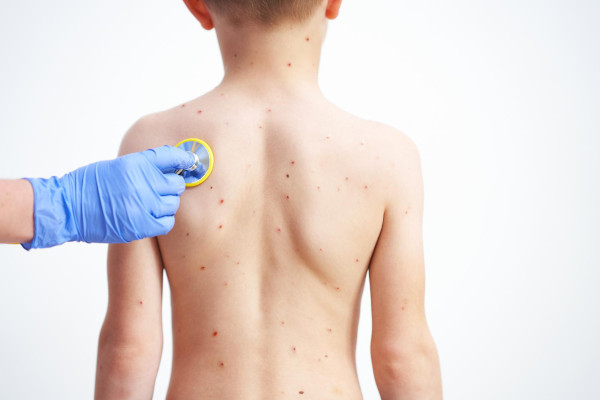
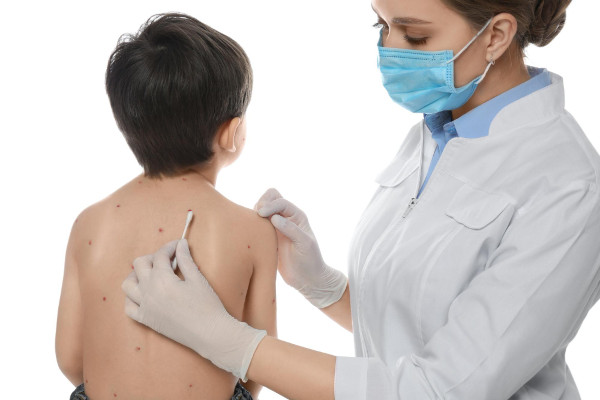
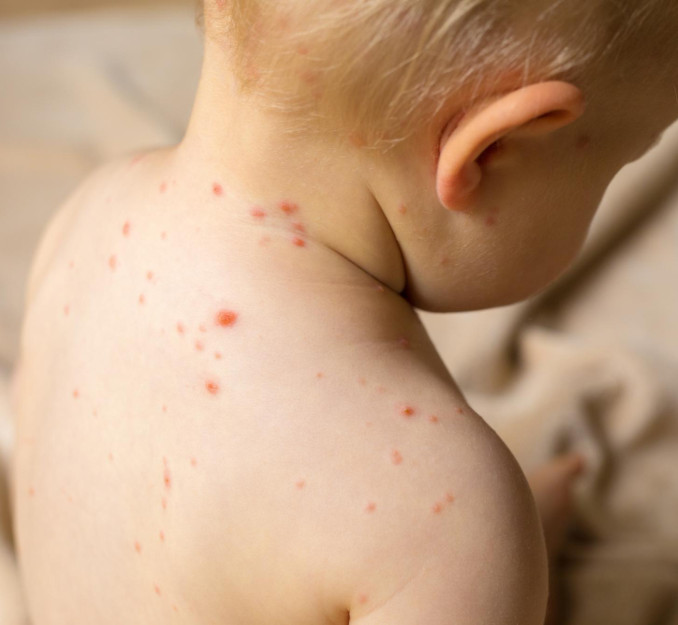
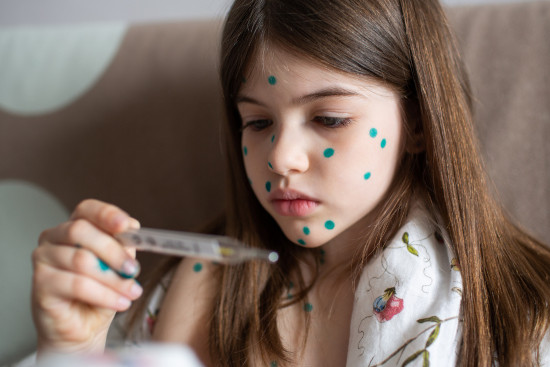
Initial symptoms often resemble those of a typical viral infection: weakness, headache, general malaise, and loss of appetite. Then, a rash appears on the skin, progressing through stages—from pink spots to blisters with clear fluid, followed by crusting.

Common symptoms include:

  • Fever up to 38–39°C
  • Rash on the face, trunk, and scalp
  • Severe itching
  • Moderate pain and swollen lymph nodes
  • Irritability, fatigue

How does chickenpox manifest itself?

Against a background of low-grade fever or fever, roseola appears on the skin after 1–2 days, quickly transforming into vesicles—small blisters filled with clear fluid. These later dry out and become crusted. The rash appears in waves: spots, blisters, and crusts can be seen simultaneously—this "polymorphism" helps the doctor make a diagnosis.

Usually, an episode lasts 7–10 days. Scratching can lead to a secondary bacterial infection—in such cases, a specialist consultation and adjustment of treatment for chickenpox in children are required.

Chickenpox Symptoms in Children of Different Ages

  • Under 2 years—usually mild, with moderate fever and few lesions.
  • 3–7 years—classic presentation; full recovery usually occurs within 7–10 days.
  • Adolescents—higher risk of severe illness: high fever, severe intoxication, profuse rash.
  • Adults (infected from a child) experience a more severe form of the disease, so prevention (vaccination) in childhood is extremely important.

Stages and forms of chickenpox

Main stages:

  • Incubation - 10-21 days without visible manifestations
  • Prodrome - 1-2 days of weakness, headache, low-grade fever
  • Rash period - 3-5 days of wave-like appearance of vesicles and itching
  • Epithelialization - formation and falling off of crusts, normalization of well-being

By severity, the following are distinguished:

  • Mild course - few elements, temperature ≤ 37.5 °C
  • Moderate - multiple rashes, fever up to 38.5 °C, severe itching
  • Severe - high temperature (up to 40 °C), Dense rash, risk of complications.

An atypical (visceral) variant with internal organ damage is rare; such patients require inpatient observation. At K+31, children with complicated forms receive 24-hour care and monitoring.

Diagnosing Chickenpox

The classic triad—a wave-like rash, itching, and fever—allows an experienced physician to make a clinical diagnosis. During the appointment, we assess the number and prevalence of elements and rule out conditions with a similar presentation (allergic dermatoses, enterovirus rashes, herpetic lesions).

In K+31, for latent or atypical variants and in children with immunodeficiencies, we use additional methods.

Laboratory Diagnostics

  • Complete Blood Test — helps assess the inflammatory response
  • Serology (IgM/IgG to VZV) — IgM indicates a current infection, IgG — developed immunity
  • PCR — detects pathogen DNA in atypical cases
  • Vesicle culture — if a bacterial complication is suspected

This approach clarifies the diagnosis and allows for the selection of the optimal management strategy for the child.

Chickenpox Complications

Although most children have a favorable course of the disease, some patients—especially adolescents and those with immunodeficiencies—may experience adverse effects:

  • Bacterial skin infections (pyoderma, cellulitis)
  • Pneumonia (viral/bacterial)
  • Neurological complications (encephalitis, meningitis) are rare but potentially dangerous
  • Internal organ damage (myocarditis, nephritis, hepatitis)
  • Reye's syndrome when taking salicylates during a viral infection

If complications are suspected, we organize extensive diagnostics and observation by specialized specialists.

When to seek immediate medical attention

Immediate medical attention is needed if:

  • Fever persists for more than 4 days
  • Purulent crusts appear, severe soreness of the affected areas
  • Shortness of breath, chest pain, and a worsening cough are noted
  • Convulsions, severe lethargy, and fainting occur
  • Severe vomiting, unsteadiness of gait

In severe cases, treatment is provided in hospital K+31 with 24-hour monitoring and individually tailored therapy.

Chickenpox Prevention and Vaccination

The most reliable protection is the Varicella Zoster vaccine. The vaccines we use are certified and demonstrate high immunogenicity: the vast majority of children develop long-lasting protection. The vaccine can be administered starting at 12 months. Immunization is especially recommended before starting kindergarten or school.

Benefits: reduced likelihood of illness and severity, reduced risk of complications, contributes to herd immunity. Mild post-vaccination reactions (low-grade fever, isolated rashes) are possible and resolve on their own.

Home Prevention

After contact with an infected person, we recommend:

  • Limit social gatherings for 21 days
  • Monitor temperature and skin condition daily
  • Regularly ventilate the room and maintain hygiene
  • Avoid contact with pregnant women and children with immunodeficiencies
  • Call a pediatrician at the first sign of symptoms

As a rule, after an episode, lasting protection develops for years; repeat cases are rare.

Why is it better to treat chickenpox on K+31?

The K+31 team supports your child at every stage—from the initial consultation and diagnosis to full recovery and subsequent prevention.

  • Experienced pediatricians and infectious disease specialists with up-to-date protocols
  • Complete diagnostics, and, if necessary, 24-hour inpatient monitoring
  • Individualized treatment plans and detailed care recommendations
  • Prevention and management of complications
  • Safe vaccinations in a convenient manner

Our goal is to ensure that our little patients recover from the infection easily and without complications, and that parents receive a clear, understandable action plan.

Why is it better to treat chickenpox on K+31?

Questions and Answers

How long does an episode last?

In children, it usually lasts 7-10 days. New lesions appear within 3-5 days, then dry up. The child is no longer contagious after the last scab falls off. In severe cases, the process can last up to two weeks.

Is showering allowed?

Yes, if the temperature is normal and the patient is in satisfactory condition. A short, warm shower without vigorous friction is preferable. Afterward, pat the skin dry, apply the prescribed products, and put on loose cotton clothing.

Does recurrence occur?

Recurrences are extremely rare. Long-term immune memory usually remains after infection. However, the dormant virus can reactivate in adulthood as shingles, a different clinical form.

Our doctors
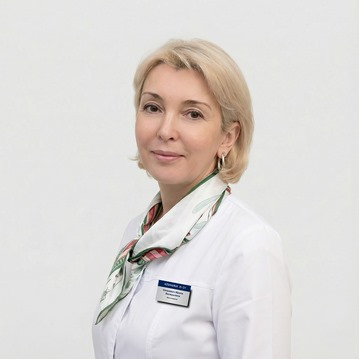
Petina Olga Anatolievna
Experience 27 years
Make an appointment
Petina
Olga Anatolievna
Pediatrician
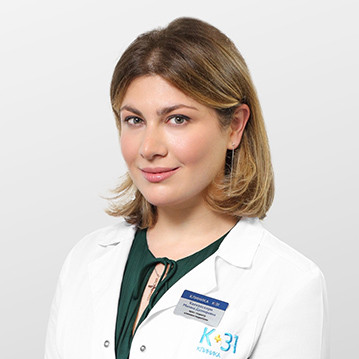
Tagoskina Natalya Anatolievna
Experience 31 year
Make an appointment
Tagoskina
Natalya Anatolievna
Leading pediatrician
Mamaev Eldar Imamutdinovich
Experience 16 years
Make an appointment
Mamaev
Eldar Imamutdinovich
Pediatrician, pediatric cardiologist
Genger Maria Andreevna
Experience 21 year
Make an appointment
Genger
Maria Andreevna
Psychologist
Negasheva Ekaterina Sergeevna
Experience 11 years
Make an appointment
Negasheva
Ekaterina Sergeevna
Dermatovenerologist
Bagaev Omar Makhachevich
Experience 19 years
Make an appointment
Bagaev
Omar Makhachevich
Dentist-therapist, pediatric
Shemetova Anastasia Alexandrovna
Experience 17 years
Make an appointment
Shemetova
Anastasia Alexandrovna
Neuropsychologist, pediatric
Nazarova Veronica Vladimirovna
Experience 20 years
Make an appointment
Nazarova
Veronica Vladimirovna
Dermatologist, pediatric
Ivanova Inga Alexandrovna
Experience 16 years
Make an appointment
Ivanova
Inga Alexandrovna
Masseur
Shamsetdinova Leila Tagirovna
Experience 16 years
Make an appointment
Shamsetdinova
Leila Tagirovna
Pediatric ophthalmologist
Polovnikova (Kroshkina) Valeria Alexandrovna
Experience 14 years
Make an appointment
Polovnikova (Kroshkina)
Valeria Alexandrovna
Traumatologist-orthopedist, pediatric
Chirkov Oleg Anatolevich
Experience 42 years
Make an appointment
Chirkov
Oleg Anatolevich
Doctor pediatric surgeon, pediatric urologist andrologist
Zubareva Yulia Valerievna
Experience 16 years
Make an appointment
Zubareva
Yulia Valerievna
Pediatrician, allergologist
Kubanova Madina Kubanovna
Experience 22 years
Make an appointment
Kubanova
Madina Kubanovna
Endocrinologist, pediatric
Krasova Anastasia Victorovna
Experience 23 years
Krasova
Anastasia Victorovna
Psychiatrist
Remezova Tatyana Vasilevna
Experience 49 years
Make an appointment
Remezova
Tatyana Vasilevna
Neurologist, pediatric
Opanevich Irina Valerievna
Experience 29 years
Make an appointment
Opanevich
Irina Valerievna
Pediatrician
Prokhorova Anastasia Dmitrievna
Experience 14 years
Make an appointment
Prokhorova
Anastasia Dmitrievna
Pediatrician
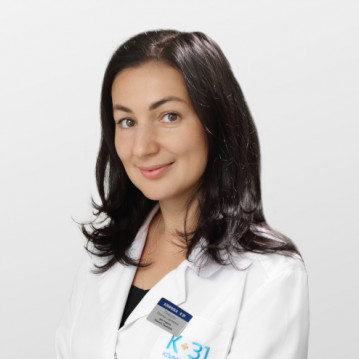
Kvekveskiri Milana Dazmirovna
Experience 10 years
Make an appointment
Kvekveskiri
Milana Dazmirovna
Pediatrician
Andrianova Svetlana Vladimirovna
Experience 17 years
Make an appointment
Andrianova
Svetlana Vladimirovna
Head of the pediatric department, leading pediatrician
Plinatus Natalya Sergeevna
Experience 10 years
Make an appointment
Plinatus
Natalya Sergeevna
Pediatrician, allergist-immunologist
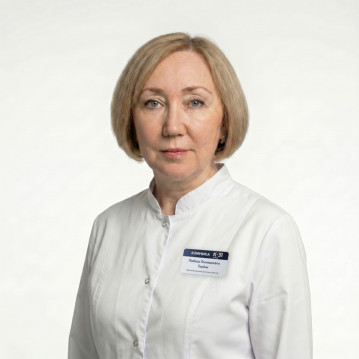
Romashkova Lyudmila Borisovna
Experience 39 years
Make an appointment
Romashkova
Lyudmila Borisovna
Ultrasound doctor, pediatric
Lopatin Kirill Alexandrovich
Experience 15 years
Make an appointment
Lopatin
Kirill Alexandrovich
Traumatologist-orthopedist, pediatric
Varenkova Olga Vladimirovna
Experience 25 years
Make an appointment
Varenkova
Olga Vladimirovna
Otorhinolaryngologist
Budeikina Liliya Sergeevna
Experience 11 years
Make an appointment
Budeikina
Liliya Sergeevna
Otorhinolaryngologist, phoniatrist
Arefieva Svetlana Aleksandrovna
Experience 17 years
Make an appointment
Arefieva
Svetlana Aleksandrovna
Cardiologist, pediatric
Babakhanyan Anna Mikhailovna
Experience 33 years
Make an appointment
Babakhanyan
Anna Mikhailovna
Otolaryngologist, pediatric otolaryngologist
Agafonova Oksana Sergeevna
Experience 20 years
Make an appointment
Agafonova
Oksana Sergeevna
Ophthalmologist, pediatric
Turkey Lana Romanovna
Experience 2 years
Make an appointment
Turkey
Lana Romanovna
Cardiologist, pediatrician
Khachatryan Maria Edwardovna
Experience 6 years
Make an appointment
Khachatryan
Maria Edwardovna
Pediatrician
Gubanova Olga Yurievna
Experience 20 years
Make an appointment
Gubanova
Olga Yurievna
Gastroenterologist, pediatrician
Bogomolov Evgeny Fedorovich
Experience 15 years
Make an appointment
Bogomolov
Evgeny Fedorovich
Chiropractor
Leshko Olga Igorevna
Experience 10 years
Make an appointment
Leshko
Olga Igorevna
Ophthalmologist, pediatrician
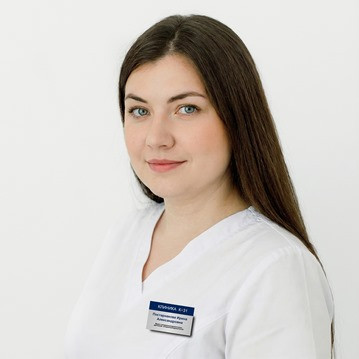
Postarnakova Irina Alexandrovna
Experience 8 years
Make an appointment
Postarnakova
Irina Alexandrovna
Otolaryngologist, pediatric otolaryngologist
Koroleva Nina Yurievna
Experience 22 years
Make an appointment
Koroleva
Nina Yurievna
Ultrasound diagnostics doctor
Shchapov Nikolay Fedorovich
Experience 19 years
Make an appointment
Shchapov
Nikolay Fedorovich
Pediatric surgeon
All specialists
2GIS Award
2GIS Award

This award is given to clinics with the highest ratings according to user ratings, a large number of requests from this site, and in the absence of critical violations.

«Good place» according to Yandex

This award is given to clinics with the highest ratings according to user ratings. It means that the place is known, loved, and definitely worth visiting.

Our doctors are laureates of the ProDoctors Award

The ProDoctors portal collected 500 thousand reviews, compiled a rating of doctors based on them and awarded the best. We are proud that our doctors are among those awarded.
Make an appointment at a convenient time on the nearest date

Price

Initial appointment (examination, consultation) with a pediatrician
from 8 190 ₽
Follow-up appointment (examination, consultation) with a pediatrician
from 7 035 ₽

Appointment to the doctor

Fill out the form, our managers will contact you within 15 minutes

Reviews

A wonderful doctor! Thank you so much and I bow low to you! We have a complicated medical history, and the doctor treated us with great care and attention!
09.12.2025
Z. Robert Dimitrievich
The doctor is very good.
08.12.2025
P. Sofia Serzhevna
Our favorite doctor. Our daughter has been going to him for several years since childhood.
02.12.2025
V. Elizaveta Vladislavovna

About doctor:

Bagaev Omar Makhachevich

We are very grateful to Kirill Aleksandrovich for his help.
02.12.2025
V. Elizaveta Vladislavovna
Olga Vladimirovna is a wonderful, attentive, and professional doctor. I was very pleased with my visit and received all the help and information I needed.
29.11.2025
Yu. Alexey Igorevich
My son is 3 years old, we had a great conversation, the doctor put me at ease with himself and the procedures. My first visit to the dentist went great!
29.11.2025
Ch. Roman Vitalievich

About doctor:

Bagaev Omar Makhachevich

I really liked the doctor, and I also really liked Zhanna Andreevna. You can tell she's experienced and competent, and the office had a wonderful, open atmosphere. Special thanks to Olesya, the administrator on the first floor. She's very friendly and helpful. Overall, I really liked the clinic.
23.11.2025
P. Daniil Vyacheslavovich
A very friendly and competent doctor.
26.10.2025
B. David Pavlovich
A pleasant and competent specialist.
21.10.2025
G. Yana Andreevna
Very attentive and professional doctor.
14.10.2025
R. Evgeniy Anatolyevich
Почему К+31?
К + 31 — full-cycle multidisciplinary medical centers, including the possibility of providing medical services of European quality level.
К + 31 — are leading doctors and diagnostics using high-tech equipment from world manufacturers (Karl Storz, Olympus, Siemens, Toshiba, Bausch&Lomb, Technolas, Zeiss, Topcon).

К + 31 — is ethical. The staff of K+31 clinics maintain open relationships with patients and partners. An individual approach to each patient is the basis of our service standards.
К + 31 — is modernity. On call 24/7: call center operators will answer your questions at any time and book you an appointment with doctors. Contact us by phone, through the feedback form on the website and WhatsApp.
Licenses

Our clinics

K+31 on Lobachevskogo

st. Lobachevskogo, 42/4

+7 499 999-31-31

Subway
1
11
Prospect Vernadsky Station
By a car
Lobachevsky, we pass the first barrier (security post of the City Clinical Hospital No. 31), turn right at the second barrier (security post K+31)
Parking pass
Opening hours
Mon-Fri: 08:00 – 21:00
Saturday: 09:00 – 19:00
Sunday: 09:00 – 18:00
Didn't find the service you were looking for?

Экстренная помощь