
ECG for a child
A child's heart works differently than an adult's, and the slightest changes in rhythm can alert the doctor. Therefore, performing an ECG on a child allows the specialist to detect hidden abnormalities early and prevent serious problems. An electrocardiogram is a quick, painless, and accurate test performed at the K+31 Clinic using modern equipment, taking into account the patient's age.

specialists

equipment

treatment




Indications for ECG in Children
A cardiologist or pediatrician will recommend an ECG if a child complains of chest discomfort, tires quickly, becomes short of breath during physical activity, or has recently recovered from an infection. This test helps detect changes in heart function early and assess how the body is recovering from an illness. Other indications include:
- Fainting, dizziness, weakness
- Heart murmurs detected during auscultation
- History of congenital defects or cardiac arrhythmias
- Preparation for athletic activity, surgery, or entering kindergarten/school
- Monitoring after treatment or heart surgery
Regular diagnostics help assess how the heart functions during different periods of a child's growth and development, as the workload on the body increases each year.

When should a child have an ECG?
According to pediatric recommendations, the first ECG is performed in the first year of life, then at 7, 12, and 15 years of age – during periods of hormonal changes. However, a doctor may prescribe the test more frequently if heart problems are suspected or if the parents have a history of hereditary heart disease.
Sometimes an ECG is required for medical documentation – for example, when registering for a sports club. In Moscow, many parents prefer to have their child's ECG done at a private clinic for a fee: this way, the results are ready quickly, and the examination takes place in a calm and friendly environment.
How is an ECG performed on children?
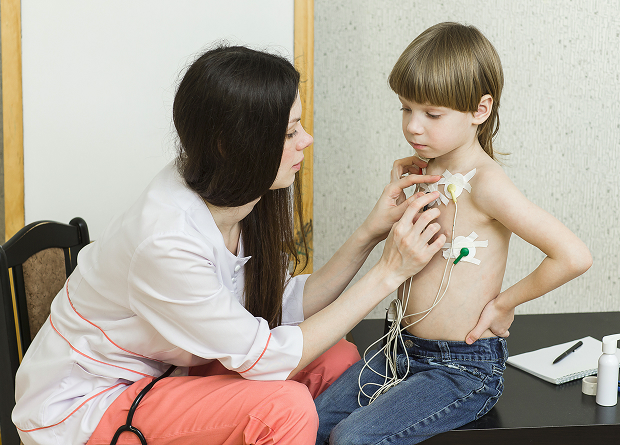
The electrocardiogram procedure is simple and safe, but it requires a special approach in children. To ensure accurate results and a stress-free experience for the child, the doctor explains the procedure and turns the process into a calm, playful experience. There is no pain or discomfort—just a few minutes of attentive work by the specialist.
How an ECG is performed?
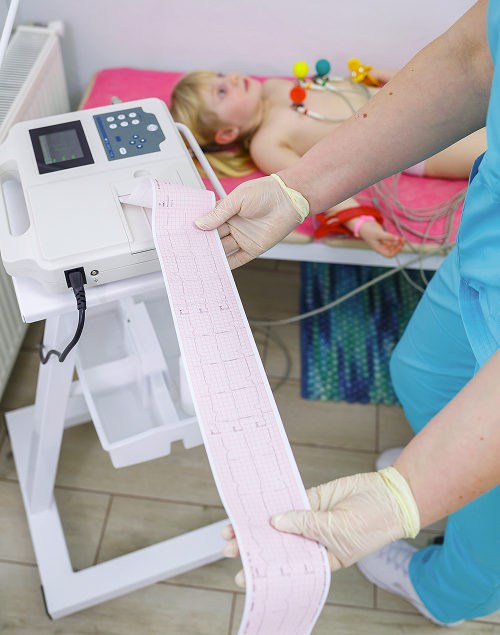
The procedure is simple: the child lies down on an examination table, and the specialist attaches small electrodes connected to the device to the child's chest, arms, and legs. During the examination, the child lies quietly, while the device records the heart's activity in various leads.
In just a few minutes, the doctor receives a graph from which to interpret the results. The procedure is painless and does not require anesthesia. The modern devices used at the K+31 clinic are designed with children's physiology in mind—the sensors don't tug or irritate the skin.
General information
Preparing for an ECG in children
To ensure a smooth test and accurate results, it's advisable to follow a few simple rules:
- Avoid feeding your child heavily before the procedure.
- Explain that it's not painful or scary.
- If possible, bring a favorite toy or book to help your child feel more confident.
If your child is active, the doctor may ask them to rest a bit before the test to ensure their heart rate is stable. Sometimes, the cardiologist will order a repeat exercise test to assess how the heart responds to movement.



Why is it better to have your child's ECG done at K+31?
The K+31 Clinic is a medical center with many years of experience in pediatric diagnostics and treatment. We create conditions where children feel calm and parents can trust the results.
Clinic advantages:
- Pediatric specialists. All functional diagnostics doctors and cardiologists have completed pediatric training.
- Modern equipment. We use high-precision electrocardiographs and disposable electrodes, ensuring a comfortable and hygienic procedure.
- Fast results. ECG interpretation is performed the same day, and results can be received in your personal account or by email.
- Comprehensive diagnostics. If necessary, your child can undergo echocardiography, 24-hour Holter monitoring, ABPM, and other cardiac diagnostics.
- Easy scheduling. Call the center or schedule an appointment through the website – an operator will find a convenient time and answer all your questions.
The clinic operates on the "one-stop shop" principle: examination, results, and cardiologist consultation all in one day. This approach saves parents time and helps them make quick treatment decisions.
Prices for an ECG for a child in Moscow

The cost of the service depends on the type of examination and the appointment format. In Moscow, the average price for an ECG for a child at a private clinic ranges from 1,500 to 2,500 rubles, and with a cardiologist's interpretation, it starts at 3,000 rubles.
At "K+31," the price is specified upon booking and includes:
- Procedure
- Results interpretation
- Specialist consultation (if necessary)
- Data storage in the patient's electronic medical record
Patients can use convenient online payment or pay for the service at the medical center. Current prices are available by calling the clinic.
It's important to remember: price shouldn't be a determining factor in a child's health. The most important factors are the accuracy of the diagnosis and the doctor's experience, as the ECG results determine how the heart is functioning and whether additional care is needed.
Regular cardiac screenings for children are not a formality, but an opportunity to prevent serious illnesses at an early stage. Having your child's ECG performed at the K+31 clinic means entrusting their health to professionals who know how to work with children and understand the importance of keeping their little patient calm.
Call the center or schedule an appointment online – a cardiologist will answer all your questions, explain the results, and help you choose the optimal monitoring plan. This approach ensures that your child's heart is functioning properly, and you have peace of mind about their health all year round.
Contraindications and restrictions
There are no absolute contraindications to electrocardiography—the procedure is safe even for newborns. However, the doctor may postpone the test if:
- The skin where the electrodes are placed is damaged or inflamed.
- The child is very agitated or crying (this affects the results).
- There is a fever and poor health.
In other cases, an ECG is a universal diagnostic method that allows you to monitor heart function at any age.
Our doctors
















































This award is given to clinics with the highest ratings according to user ratings, a large number of requests from this site, and in the absence of critical violations.

This award is given to clinics with the highest ratings according to user ratings. It means that the place is known, loved, and definitely worth visiting.

The ProDoctors portal collected 500 thousand reviews, compiled a rating of doctors based on them and awarded the best. We are proud that our doctors are among those awarded.
Make an appointment at a convenient time on the nearest date
Price
Other services

Appointment to the doctor
Reviews











Our clinics


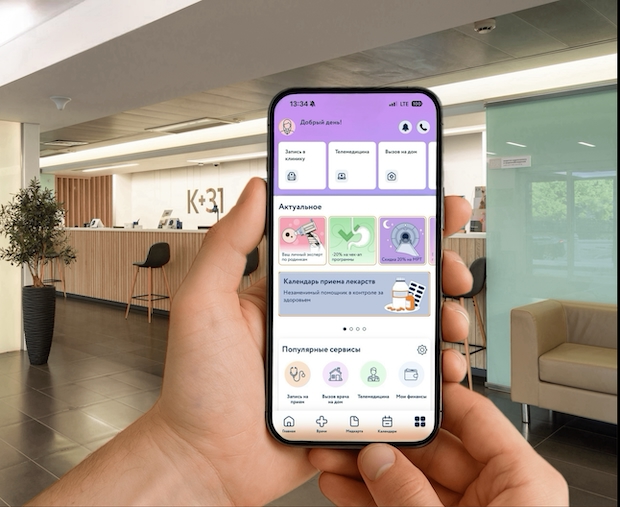
Application “Personal Account K+31”










What is an ECG?
ECG (electrocardiography) is a diagnostic method in which electrodes are placed on a child's skin to record the electrical impulses generated by the heart. These impulses are displayed as a graph—a cardiogram—which allows the doctor to assess the heart muscle function, heart rate and rhythm, and the condition of the atria and ventricles.
The method is completely safe and suitable even for newborns. It can be performed at a medical center or at home, takes only a few minutes, and results are available the same day.