
Treatment of Cephalhematoma in Newborns
Even in the first days of a baby's life, various pathologies can be a concern. One such condition is cephalhematoma, which causes great concern among parents due to a lack of information. Fortunately, in most cases, this condition does not seriously harm the baby's health, but despite this, it should not be ignored by a doctor.

specialists

equipment

treatment






Causes and provoking factors
The development of cephalohematoma in children is caused by certain negative factors that create conditions for subcutaneous blood accumulation. The primary factors are the characteristics of pregnancy and specific changes in the fetus. These include:
- The risk of premature termination of pregnancy at any stage of pregnancy
- Ultrasound diagnostics revealing signs of congenital infections in the fetus
- The development of symptoms of preeclampsia, accompanied by increased blood pressure and impaired renal function
- The presence of bacterial infections such as ureaplasma
- Chronic disruptions in blood circulation between the mother and fetus via the placenta

It has been suggested that the development of cephalohematoma may be triggered by the use of therapeutic medications, either prescribed by a doctor or taken by a pregnant woman on her own.
Often, pathological processes can be triggered by diseases of the expectant mother's internal organs, not related to obstetrics and gynecology. These include inflammatory lesions of the urinary tract, such as pyelonephritis, respiratory diseases (e.g., bronchitis), iron deficiency anemia, and blood clotting disorders (thrombophilia).
Other risks include the birth of a first child, excessively rapid passage of the fetus through the birth canal, compression of the cervical cord, an anatomically narrow pelvis of the mother, and the use of auxiliary extraction instruments.
Classification of cephalohematoma
Based on the volume of blood accumulation and the size of the resulting lesion, cephalohematoma in newborns can be classified into one of three severity categories:
- Mild severity is characterized by a diameter of the affected area less than 4 centimeters
- Moderate severity is diagnosed with a hemorrhagic spot diameter from 4.1 to 8 centimeters inclusive
- Severe stage is diagnosed with a hematoma size greater than 8 centimeters
Considering possible concomitant injuries sustained by the child during childbirth, several types of cephalohematoma are distinguished:
- The injury is accompanied by a fracture of the newborn's skull bones
- Traumatic brain injuries of varying severity are present
- A neurological symptom complex occurs
According to the location of the defect, the most Cephalohematomas in infants commonly occur in the parietal, occipital, and frontal areas of the head. Damage to the temporal bones is much less common.
Symptoms of a Cephalhematoma
Signs of a cephalhematoma appear inconsistently – sometimes almost immediately after birth, and sometimes only after two or three days. Localized cases usually do not significantly affect the child's well-being, but in the presence of concomitant pathologies, symptoms can range from mild to severe, bordering on critical. In the first days after detection, the defect can increase in size, as the blood coagulation mechanisms in a newborn infant are not yet fully developed.
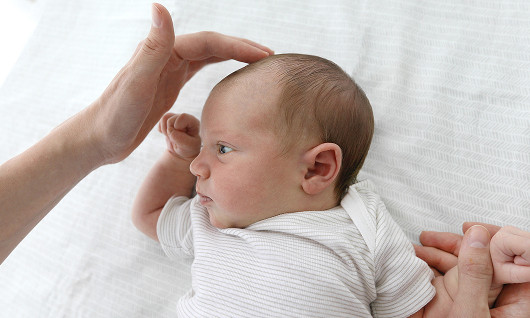
A hematoma on a child's head is visually easily recognizable due to its characteristic features: a clear outline, the presence of borders, and a connection with a specific bone structure of the skull. The average size of such a formation ranges from three to seven centimeters. Multiple focal lesions, affecting several areas of the skull bones, are also common.
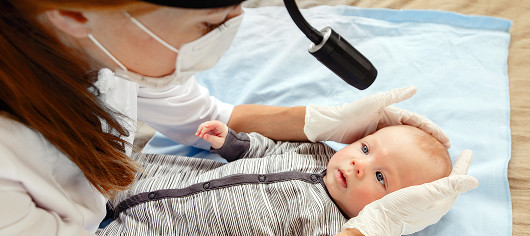
A neonatologist or pediatrician examining the patient identifies characteristic clinical signs: a rounded mass, painless to palpation, elastic to the touch, with signs of fluid fluctuation ("fluctuation symptom"), but no pulsating activity.
Small tumors (up to three centimeters wide) tend to regress spontaneously within two weeks. They completely disappear within about two months. In contrast, massive postnatal defects require surgical removal, as such formations cannot resolve on their own.
Treatment methods for cephalohematoma
Timely diagnosis and proper treatment allow for rapid management of this condition, minimizing the risk of serious complications. Treatment of cephalohematoma involves various approaches, both invasive and conservative. The decision on which approach is appropriate for a particular situation is made by the attending physician.
Conservative treatment
Most often, conservative therapy involves a gentle regimen and includes:
- Feeding the infant expressed breast milk for the first 3-4 days
- Taking anti-inflammatory medications, such as calcium gluconate and vitamin K, to accelerate hematoma resolution for three days
Hospitalization is only necessary if serious complications develop, such as infection of the cephalohematoma or calcium deposits that threaten cranial bone deformity.
Surgical treatment
If a significant hematoma persists in an infant after ten to twelve days of life, a consultation with a pediatric surgeon is necessary (preferably within the first week and a half after birth). After a thorough examination, the doctor will determine the next steps. If the cephalohematoma shrinks on its own, no further medical intervention is required.
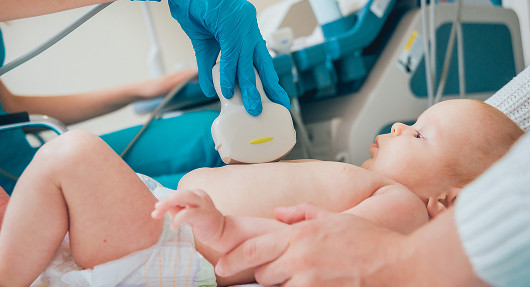
Despite its widespread occurrence, a single, standardized treatment regimen has not yet been developed. Cephalohematoma puncture has proven to be an effective method for removing the mass. It helps prevent mineralization and subsequent complications. Standard laboratory tests, craniography, and neurosonography are prescribed before surgery. If there are no contraindications, puncture is acceptable.
Когда обращаться к врачу
Обращайтесь к специалисту незамедлительно, если заметили следующее:
- Появились шишки или бугры на голове ребенка, пусть даже маленькие и совершенно безболезненные
- Образование стало крупнее, изменилось по плотности или цвету кожи над ним. Увеличение припухлости, ее затвердевание или покраснение кожи указывают на возможное инфекционное заражение или другие опасные осложнения
- Новорожденный стал капризничать или плакать сильнее при касаниях к образованию. В норме оно абсолютно безболезненно, поэтому такая чувствительность сигнализирует о проблемах
- Наблюдаются апатичность, постоянное желание спать, потеря интереса к кормлению, частые срыгивания или судороги
Перечисленные признаки ни в коем случае нельзя оставлять без внимания, поскольку образование может требовать срочного медицинского вмешательства.

Why is it better to treat cephalohematoma in newborns at K+31?
Children's cephalhematoma can be treated with minimal risk of complications if you trust professionals with extensive experience. These are the doctors who work at the K+31 Clinic. Other important advantages of our medical center include:
- Fast and accurate diagnosis. Doctors identify problems quickly and accurately.
- Experienced pediatric surgeons, neurologists, and pediatricians are ready to help around the clock. Their knowledge and skills have improved the health of thousands of young patients.
- Safe and modern equipment. We use the best and most advanced equipment for both children and adult patients.
- Individual approach. Your child will receive a personalized treatment plan tailored specifically to their needs.
- Comfort and care. At our clinic, your little patient will feel calm and comfortable.
If you want to protect your child from the consequences of cephalohematoma and other pathologies, choose "K+31." Your baby's health is our top priority.
Our doctors

















This award is given to clinics with the highest ratings according to user ratings, a large number of requests from this site, and in the absence of critical violations.

This award is given to clinics with the highest ratings according to user ratings. It means that the place is known, loved, and definitely worth visiting.

The ProDoctors portal collected 500 thousand reviews, compiled a rating of doctors based on them and awarded the best. We are proud that our doctors are among those awarded.
Make an appointment at a convenient time on the nearest date
Price
Other services

Appointment to the doctor




Reviews









Our clinics


Application “Personal Account K+31”












General information about cephalohematoma
Cephalhematoma (International Classification of Diseases code P12.0) is a localized, blood-filled mass located between the infant's cranial bones and the dense tissue membrane called the periosteum. This condition develops as a result of internal bleeding, often caused by complicated labor.
This condition is quite common among newborns – statistics indicate that approximately 1–2% of babies experience this problem. There are no gender differences – boys and girls are equally susceptible. Signs of a hematoma are detected immediately after birth or within a day or two.
An alternative name for this condition is subperiosteal hemorrhage. Despite the frightening medical terminology, most cases are benign and do not threaten the baby's life or health, gradually disappearing naturally over a period of several weeks to a couple of months.