
Пептиды в медицине долголетия: научный подход без хайпа
Сегодня пептиды — одна из самых обсуждаемых тем в anti-age медицине и биохакинге. Социальные сети наполнены обещаниями: омоложение, рост мышц, восстановление, перезапуск организма. Но чем популярнее становится тема, тем важнее отделять медицинский подход от модного шума.
В Центре персонализированной и превентивной медицины К+31 мы работаем с пептидами только в рамках доказательной медицины — на основе диагностики, чёткого понимания целей, противопоказаний и под постоянным медицинским наблюдением.
Why injectable peptides require a doctor's consultation
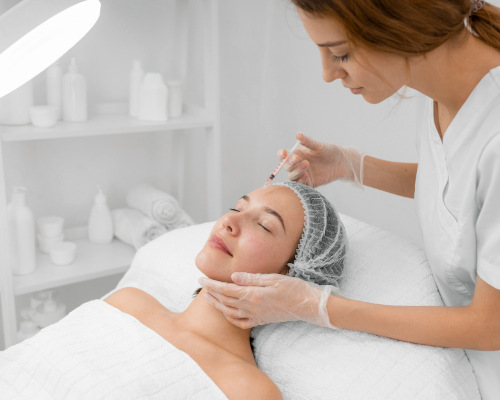
Cosmetics containing a peptide act primarily at the epidermal level and have virtually no effect on systemic processes. Injection is a fundamentally different matter: subcutaneous or intramuscular administration releases the peptide into the systemic bloodstream, from where it gains access to all organs and tissues.

Key reasons why injectable peptides should not be considered “harmless dietary supplements”:
-
Systemic action and ambiguity of effects
The same signaling pathway can promote tissue regeneration in one case and stimulate tumor growth in another. Peptides influence vascular growth, hormonal axes, and reproductive and adrenal balance. Without understanding the individual context, this is unpredictable.
-
Pharmacokinetics and dose dependence
Peptide absorption, distribution, metabolism, and elimination are unique to each individual. Accumulation, peak concentrations, risks of tolerance, and receptor desensitization all require an individualized dosing regimen. The logic of "increasing the dose will make it work faster" is downright dangerous in some cases.
-
Comorbidity and drug interactions
Most patients interested in anti-aging medications are already taking antihypertensive medications, statins, anticoagulants, and hormone therapy. Peptides can enhance or weaken their effects, affecting blood clotting, blood pressure, heart rate, and electrolyte balance. This is the domain of clinical pharmacology—and only a physician.
-
Quality and lack of regulatory control
Most "fashionable" injectable peptides are not registered as drugs and are not approved by regulatory agencies. Even the substitution of one or two amino acids in a molecule dramatically alters the effect and makes it unpredictable. A doctor working with a high-quality, certified product knows exactly what they're doing. This is not the case with gray-market products.

Biohacking as Medicine: Where is the Line?
Biohacking itself is an attempt to consciously control biological processes. Stripped of the marketing fluff, the idea behind it is preventative and personalized medicine. Biohacking becomes medicine when several conditions are met:
- Diagnostics, not guesswork. First comes anamnesis collection, risk assessment, laboratory and instrumental diagnostics, stratification by key areas (cardiovascular risk, metabolic status, cognitive function, hormonal levels, cancer risk). Only then is the selection of tools.
- Evidence-based. Only those approaches whose efficacy and safety have been confirmed by randomized trials or meta-analyses are used.
- Systematicity and priorities. First comes proven "big levers": control of blood pressure, lipids, body weight, normalization of sleep and physical activity. Peptides and other modules are only built on top of the established foundation.
- Monitoring and feedback. Any intervention requires an assessment of efficacy and safety: specific biomarkers, timing, and criteria for continuation and discontinuation.

Why Social Media Is a Bad Guide to Peptides
Social media algorithms promote content that evokes emotion, not content that reflects the scientific picture. This leads to systemic problems:
- Effect overstatement — before/after stories get likes; stories about side effects or the lack of effect in randomized trials do not.
- Survivor effect — we hear from those for whom treatments "worked," but not from those who developed complications.
- Conflict of interest — influencers monetize their credibility through courses, protocols, and affiliate products.
- Lack of personalization — advice is aimed at the "average" person. What's considered relatively safe for a healthy 30-year-old may be unacceptable for a patient with a history of cancer, hypertension, and subclinical hypothyroidism.
Choosing a peptide based on advice from social media is participating in an uncontrolled experiment without informed consent or quality guarantees.
What happens before an appointment to K+31
At our center, any prescription for peptide therapy is preceded by a comprehensive diagnostic work:
1. Comprehensive history and risk assessment
- Family history: cancer, cardiovascular, and neurodegenerative diseases
- Personal history: cancer, autoimmune diseases, thrombosis, chronic infections
- Current diagnoses and medications (including dietary supplements)
- Lifestyle: sleep, stress, physical activity, nutrition
2. Laboratory and instrumental assessment
This is signed by the doctor individually during an in-person appointment.
3. Formulating goals and expected outcomes
The honest answer to the question: are we treating a specific disease with proven drugs, or are we trying to "improve everything a little bit"? These are fundamentally different clinical situations.
4. Selection of molecules and routes of administration
Priority is given to registered drugs with known safety and efficacy profiles. For unregistered drugs, an honest discussion about the level of evidence and risks is required.
5. Monitoring plan
Before starting therapy, we determine: which markers to monitor, how long it takes to expect changes, what signals to reduce the dose or discontinue the drug, and how long it is safe to continue.
The Longevity Pyramid: Peptides as an Element of the System
Modern longevity medicine is not a search for one "magic" drug. It is a system of long-term health management, the goal of which is to extend the period of active, functional, and high-quality life. We use a pyramid model, where each level makes sense only if the previous one is built.
| Level | Contents |
|---|---|
|
1. Diagnostics |
Biological age assessment, biomarkers, risk identification, chronic disease management |
|
2. Lifestyle |
Sleep, nutrition, physical activity, and stress management determine 50–65% of health. |
|
3. Nutritional Support |
Personalized vitamins, minerals, omega-3, NAD⁺ precursors — as indicated, not as "fashionable" |
|
4. Pharmacology and Medical Interventions |
Proven medications, hormonal therapy as indicated, injectables — including peptide drugs |
|
5. Experimental Strategies |
Gene and cell therapy, epigenetic reprogramming, new geroprotectors—only with well-established levels 1–4 |
Peptides are present at several levels: from approved drugs with proven benefits (insulin and incretin analogs for diabetes, obesity, and metabolic syndrome) to experimental geroprotectors for which there is insufficient long-term clinical outcome data.
At our clinic, we clearly understand where solid evidence ends and the experimental realm begins. And we always communicate this honestly with our patients.
At the K+31 Center for Personalized and Preventive Medicine, peptides are not considered a universal solution or a standalone "longevity protocol." We use them only as one tool within a full health management cycle:
- In-depth diagnostics and biological age assessment
- Personalized prevention and risk factor correction strategy
- Lifestyle support
- Regular effectiveness monitoring
- Long-term specialist monitoring
This approach allows us to address the underlying causes rather than masking symptoms. Rather than "blindly stimulating the body," we understand which systems truly require support and develop a medically sound, safe, and long-term health maintenance strategy.




This award is given to clinics with the highest ratings according to user ratings, a large number of requests from this site, and in the absence of critical violations.

This award is given to clinics with the highest ratings according to user ratings. It means that the place is known, loved, and definitely worth visiting.

The ProDoctors portal collected 500 thousand reviews, compiled a rating of doctors based on them and awarded the best. We are proud that our doctors are among those awarded.

Appointment to the doctor
Reviews



Our clinic


Application “Personal Account K+31”












What are peptides?
Today, peptides are one of the most discussed topics in anti-aging medicine and biohacking. Social media is filled with promises: rejuvenation, muscle growth, restoration, and a body reboot. But the more popular the topic becomes, the more important it is to separate the medical approach from the buzz.
A peptide is a short chain of amino acids (from 2-3 to several dozen) linked by peptide bonds. Unlike large proteins, peptides act as signaling molecules: within a cell, each "signal" indicates what to turn on or off, where to move, whether the cell needs to divide or use a hormone.
Many well-known hormones are essentially peptides: insulin, glucagon, adrenocorticotropic hormone, and some hypothalamic and pituitary hormones. Neuropeptides regulate mood, pain, motivation, and appetite. Immune peptides are involved in pathogen recognition.
In pharmacology, existing natural peptides are modified—amino acids are replaced, the molecule is cyclical, or a chemical "tail" is added—to ensure their longer persistence in the blood, better binding to receptors, and reduced degradation by enzymes. This is how various types of insulin, GLP-1 and GIP analogs, and peptide antitumor and anti-osteoporosis drugs were developed.
It's important to understand: not every peptide popular in biohacking has made it to the stage of becoming a fully-fledged drug. Between the idea of a molecule and a clinically proven drug, there are years of preclinical and many years of clinical research.