Demodicosis (subcutaneous mite): diagnosis and treatment by a doctor

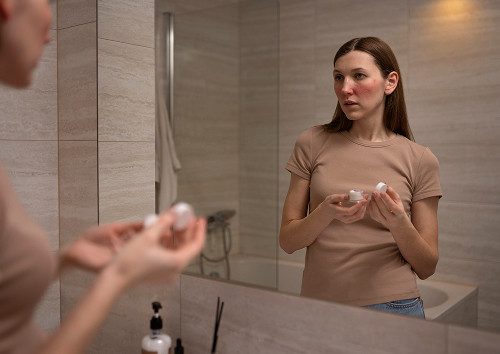
When persistent inflammatory lesions, severe redness, or persistent flaking suddenly appear on the face, people often attribute it to improperly selected cosmetics or temporary hormonal imbalances.

In dermatological practice, such manifestations often conceal demodicosis, a condition caused by a microscopic subcutaneous mite.

At the K31 Clinic, we encounter such clinical cases daily, so we know that effective treatment for demodicosis is impossible without precise confirmation of the underlying cause. We do not recommend wasting time on experiments, as only an experienced dermatologist can accurately assess the clinical picture, conduct laboratory tests, and develop a safe treatment plan.

Best specialists
Best
specialists
Expert equipment
Expert
equipment
Advanced diagnostic treatment
Advanced diagnostic
treatment
Sign up
Fill out the entry form on the page and we will call you back
Sign up Позвонить
Download the application “Personal Account K+31”
Everything about your health in one click!
Subscribe to social networks K+31
To keep up to date with current offers and receive useful advice about your health.

What is demodicosis?

Demodex is a microscopic, opportunistic parasite that normally coexists peacefully with humans, feeding on dead epidermal cells and sebum. It belongs to the phylum Arthropoda, and its favorite habitats are areas with increased sebum secretion, such as the sides of the nose, forehead, chin, and eyelid margins. As long as the epidermis's protective properties remain normal, this microscopic inhabitant remains silent and causes no discomfort. However, as soon as the balance is disrupted, its population increases dramatically, and its waste products cause severe tissue irritation and trigger a full-blown parasitic disease.

Why Demodex Doesn't Develop in Everyone

The main cause is a change in sebum composition and a general decrease in local immunity. Chronic gastrointestinal diseases, prolonged stress, endocrine disorders, or the uncontrolled use of hormonal ointments can trigger increased microbial activity. Excessive sebum secretion also plays a negative role, as oily skin serves as an ideal breeding ground for the parasite. When the protective skin barrier is thinned or damaged, microorganisms penetrate deeper into the follicles and trigger an immune response.

What is demodicosis?

Symptoms of demodicosis

Demodicosis on the Face

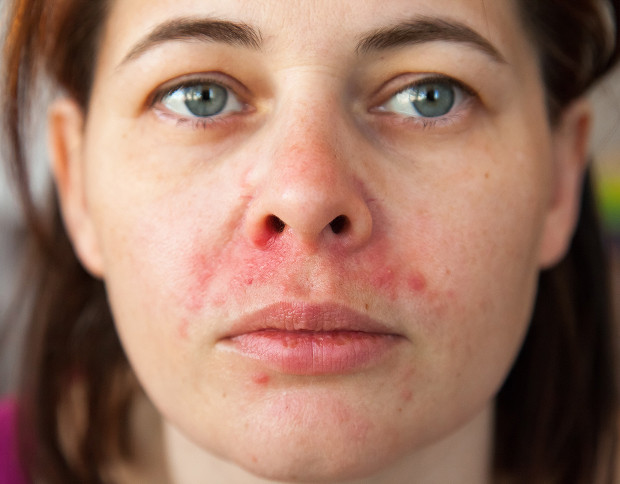
When demodicosis develops on the face, the clinical picture can be very varied, making it difficult to independently assess the condition. Patients typically complain of constant redness, localized to the cheeks, nose, and chin. The skin in these areas becomes bumpy, with small inflammatory nodules (papules) and pustules (pustules) forming. A characteristic feature is that the inflammatory lesions are accompanied by a specific sensation: a distinct itching sensation, which intensifies in the evening and at night, as the parasite is most active in the dark. Additionally, pronounced peeling of the epidermis is observed, which does not disappear even after applying thick nourishing or moisturizing creams.

Demodicosis of the eyelids and eyelashes

With demodicosis of the eyelids, patients begin to experience a constant burning sensation, a gritty sensation in the eyes, and a severe heaviness in the eyelid area. In the morning, it becomes difficult to open the eyes due to a sticky discharge that dries and forms thick scales and crusts at the base of the eyelashes. If these symptoms are ignored, concomitant blepharitis develops, the eyelashes begin to thin, change their growth direction, or fall out rapidly, and the constant irritation of the mucous membrane of the eye can lead to a gradual deterioration of vision.

When symptoms resemble acne or rosacea

The symptoms of demodicosis often mimic other common dermatological conditions, leading people to spend years undertreating them incorrectly. The external manifestations can almost completely mimic common acne or the papulopustular form of rosacea. All of these conditions involve inflamed areas, redness, and spider veins on the face.

Symptom Demodicosis Acne Rosacea
Itching Often Less common Possible
Redness Often Occurs Often
eyelid damage possible rare sometimes
diagnosis examination + microscopy examination clinical assessment
tactics individualized treatment plan due to rashes due to inflammation

When to see a doctor

When to see a doctor

Worrying Signs That Won't Help You

You should see a doctor if:

  • Inflammatory lesions and a rash on the skin persist for more than two to three weeks
  • Routine skin care is ineffective
  • Redness and rashes intensify after using ointments or acne treatments
  • Redness spreads to new areas of the face
  • Crusting appears on the eyelashes
  • Burning or tearing is a concern
  • Vision deteriorates

Don't try to hide the problem with makeup or wait for the symptoms to go away on their own. Early consultation with a specialist helps avoid complications and scarring.

General information

How we confirm the diagnosis

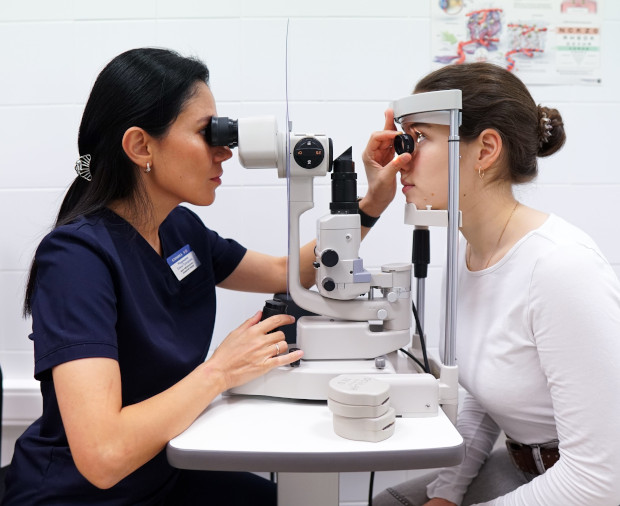
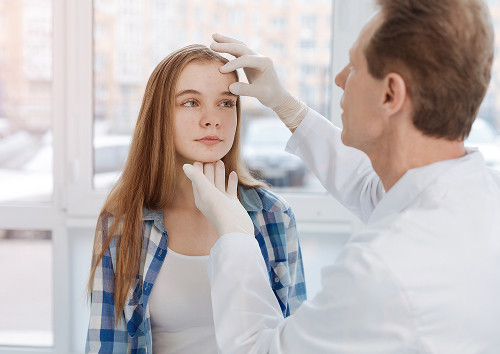
A thorough examination by a dermatologist

At the K31 clinic, demodicosis diagnosis always begins with a detailed and thorough clinical examination. Our dermatologist will thoroughly interview the patient about their disease history, assess the nature of the rash, skin type, and the condition of the facial blood vessels.

What is included in the initial consultation if demodicosis is suspected:

  • A thorough visual examination of the facial skin and eyelid margins
  • A detailed collection of the patient's complaints and a review of the medical history
  • Accurate laboratory analysis for demodicosis
  • Preparation of initial gentle hygiene and care recommendations
  • Development of a plan for further treatment and diagnostic measures

Demodicosis Test: Skin Scraping and Eyelash Examination

First, a superficial skin scraping is taken from the affected areas of the patient's face using a special sterile instrument. If a person complains of dryness and itching in the eye area, several eyelash hairs are collected and a detailed examination of the eyelashes is performed. The collected biomaterial is immediately sent to a laboratory for direct microscopy. Under a powerful microscope, a specialist can not only detect the presence of the parasite but also accurately count the number of adult parasites, larvae, and eggs per square centimeter.

How to distinguish demodicosis from other skin conditions

During the examination, we carefully rule out pathologies such as seborrheic dermatitis, allergic contact dermatitis, classic acne, or systemic rosacea. Without microscopic confirmation, it is very easy to make a mistake and prescribe a treatment that will mask the external symptoms without addressing the underlying cause.

How we confirm the diagnosis

How is demodicosis treated?

Individualized treatment plan

At the K31 clinic, a customized treatment plan is always developed, taking into account the severity of the condition, the patient's skin type, the presence of concomitant somatic diseases, and the duration of the disease. There is no universal pill or ointment for this problem, so therapy is always comprehensive and aimed at both suppressing the activity of the pathogen and restoring the protective properties of the epidermis.

Local therapy and competent care

The basis of the therapeutic process is properly selected local therapy, which includes the use of specialized antiparasitic, anti-inflammatory, and antibacterial topical agents in the form of creams, gels, or ointments. At the same time, we organize gentle home skin care, as aggressive cleansing or the use of inappropriate cosmetics will ruin all your efforts.

Result Monitoring and Treatment Adjustment

The epidermal restoration process takes time, so treatment for demodicosis typically takes several weeks to a couple of months. If necessary, the individual treatment plan can be adjusted, the concentrations of active ingredients can be changed, or physical therapy can be added. At the end of the treatment course, a repeat laboratory test for demodicosis is mandatory.

How is demodicosis treated?

Why Self-Medication Often Fails

Care Mistakes and Harsh Products

In an attempt to kill the mite, patients begin wiping their faces with pure alcohol, applying concentrated sulfur ointment, using harsh scrubs, or performing deep at-home peels. Such aggressive treatments completely destroy the skin's natural lipid mantle, causing severe chemical inflammation and making the tissue even more vulnerable.

The Dangers of Incorrectly Selected Medications

Self-medication is dangerous due to the uncontrolled purchase and use of strong antibiotics or hormonal ointments. Topical glucocorticosteroids can indeed reduce redness and itching for a few days, creating the false illusion of a quick recovery. However, hormonal medications locally suppress the skin's immune system, leading to an explosive growth of the parasite population and a severe exacerbation of the disease, which can be very difficult to manage.

Doctor's quote:

"In our practice, we begin not with aggressive treatments, but with a confirmed diagnosis and an assessment of the skin condition. This approach helps us choose a safe regimen, avoid unnecessary prescriptions, and avoid wasting time on ineffective self-medication."

Why Self-Medication Often Fails

Preventing flare-ups and home care

What helps reduce skin irritation

To prevent relapses, we recommend:

  • Use only the products recommended by your doctor for daily skin cleansing
  • Change pillowcases regularly
  • Wash bed linens at a high temperature and iron them
  • Use disposable paper towels for your face
  • Follow daily skin hygiene rules

What to avoid

We recommend minimizing your consumption of:

  • Hot seasonings, spices, and overly salty foods
  • Excessively hot foods and drinks
  • Alcohol in any quantity
  • Foods high in fast carbohydrates and sugar.

All home prevention of flare-ups is based on eliminating any irritants that can disrupt the stability of the epidermis.

Preventing flare-ups and home care

Frequently Asked Questions

What is demodicosis and how does it differ from a common rash?

Demodicosis is a condition in which the Demodex mite causes inflammation, itching, redness, and flaking of the skin or eyelid lesions.

How is demodicosis diagnosed?

The diagnosis is confirmed by a doctor's appointment: a skin examination is performed, the patient's symptoms are assessed, and, if necessary, a skin scraping or eyelash examination is performed under a microscope.

Can demodicosis be treated at home?

Self-medication often provides a temporary effect or worsens the condition. Without an accurate diagnosis, it's easy to confuse demodicosis with acne, rosacea, or blepharitis, so it's best to start with a specialist examination.

Is demodicosis contagious?

The mite itself can affect many people, but not everyone develops the disease. Transmission is possible through close contact, but the condition of the skin, the immune response, and proper care are much more important.
When should you book a consultation?

When should you book a consultation?

Healthy skin begins with an accurate diagnosis and treatment under the supervision of a dermatologist. If rashes, itching, and redness persist, don't delay in contacting a specialist. At the K31 Clinic, we can help you choose a treatment, restore skin comfort, and reduce the risk of cosmetic complications.

References

Our doctors

Karapetyan Arevik Samvelovna
Experience 12 years
Make an appointment
Karapetyan
Arevik Samvelovna
Ophthalmologist, Laser Surgeon
Batalina Larisa Vladimirovna
Experience 33 years
Make an appointment
Batalina
Larisa Vladimirovna
Deputy chief physician for ophthalmology, ophthalmic surgeon, leading specialist in laser vision correction
Amiryan Anush Gamletovna
Experience 28 years
Make an appointment
Amiryan
Anush Gamletovna
Ophthalmic oncologist surgeon
Medvedev Yulia Alexandrovna
Experience 11 years
Make an appointment
Medvedev
Yulia Alexandrovna
Ophthalmologist, Laser Surgeon
Rudkovskaya Elena Mikhailovna
Experience 38 years
Make an appointment
Rudkovskaya
Elena Mikhailovna
Ophthalmologist
Tegniryadnova Ekaterina Valerievna
Experience 20 years
Make an appointment
Tegniryadnova
Ekaterina Valerievna
Ophthalmologist, laser surgeon
Fadeeva Victoria Anatolievna
Experience 13 years
Make an appointment
Fadeeva
Victoria Anatolievna
Doctor ophthalmologist, laser surgeon
Shamsetdinova Leila Tagirovna
Experience 17 years
Make an appointment
Shamsetdinova
Leila Tagirovna
Pediatric ophthalmologist
Gavrilina Polina Dmitrievna
Experience 8 years
Make an appointment
Gavrilina
Polina Dmitrievna
Ophthalmologist, laser surgeon
Sugonyaeva Olga Yurievna
Experience 26 years
Make an appointment
Sugonyaeva
Olga Yurievna
Ophthalmologist, laser surgeon
Khlunovskaya Anna Nikolaevna
Experience 8 years
Make an appointment
Khlunovskaya
Anna Nikolaevna
Ophthalmologist
Akhiyarova Azalia Azatovna
Experience 4 years
Make an appointment
Akhiyarova
Azalia Azatovna
Ophthalmologist
Putintseva Polina Andreevna
Experience 6 years
Make an appointment
Putintseva
Polina Andreevna
Ophthalmologist
Agafonova Oksana Sergeevna
Experience 21 year
Make an appointment
Agafonova
Oksana Sergeevna
Ophthalmologist, pediatric
Kazennov Alexey Nikolaevich
Experience 19 years
Make an appointment
Kazennov
Alexey Nikolaevich
Ophthalmologist, ophthalmologist-surgeon
Petrova Maria Grigorievna
Experience 14 years
Make an appointment
Petrova
Maria Grigorievna
Ophthalmologist, ophthalmic surgeon
Mazmanyan Karen Akopovich
Experience 28 years
Make an appointment
Mazmanyan
Karen Akopovich
Ophthalmic surgeon
Suchkova Valeria Alekseevna
Experience 6 years
Make an appointment
Suchkova
Valeria Alekseevna
Ophthalmologist
Khubieva Salima Aslanbievna
Experience 7 years
Make an appointment
Khubieva
Salima Aslanbievna
Ophthalmologist, laser surgeon
Rytik Nina Petrovna
Experience 15 years
Make an appointment
Rytik
Nina Petrovna
Ophthalmologist
All specialists
2GIS Award
2GIS Award

This award is given to clinics with the highest ratings according to user ratings, a large number of requests from this site, and in the absence of critical violations.

«Good place» according to Yandex

This award is given to clinics with the highest ratings according to user ratings. It means that the place is known, loved, and definitely worth visiting.

Our doctors are laureates of the ProDoctors Award

The ProDoctors portal collected 500 thousand reviews, compiled a rating of doctors based on them and awarded the best. We are proud that our doctors are among those awarded.

Make an appointment at a convenient time on the nearest date

Price

Reception
Price
Initial Ophthalmologist Appointment
from 6 450 ₽
Repeat Ophthalmologist Appointment
from 5 700 ₽

Appointment to the doctor

Fill out the form, our managers will contact you within 15 minutes

Reviews

Olga Viktorovna conducted the examination very carefully, answered all questions, and gave recommendations. I really liked how the reception went. Thank you very much!
07.08.2026
Mariya T.

About doctor:

Kisel Olga Viktorovna

An excellent doctor, helped solve the problem, explained everything how and what manipulations to do for self-care) in general, I am extremely pleased and glad, thank you very much again!
05.08.2026
Georgiy S.
The highest professionalism and patient orientation, thank you Irina Vasilyevna!
31.07.2026
Mihail Sh.

About doctor:

Mavrova Irina Vasilievna

I really enjoyed the visit. Every mole was checked and given clear recommendations. You can immediately see the professionalism and love for your work! Thanks !
31.07.2026
Kristina G.
I would like to express my gratitude to Alina Vasilyevna. He is a specialist of the highest level who combines deep knowledge, vast experience and a truly human attitude towards patients. From the first meeting, one feels professionalism, confidence and a sincere desire to help. There are really few such doctors.
30.07.2026
Anna Ch.
Thank you, everything is fine!
28.07.2026
Irina C.

About doctor:

Ivlieva Maria Georgievna

Daria Alekseevna Andriako is the best dermatologist, an excellent specialist, a pleasant woman, I recommend it.
28.07.2026
D. Chap.
It's not the first time I've come to Svetlana Ivanovna, I'm always attentive, she asks me in detail in the morning and finds out about the problem I'm dealing with! I prescribed the treatment and scheduled everything! I am very grateful to her!
27.07.2026
Asel H.

About doctor:

Bobko Svetlana Ivanovna

The doctor shares information, explains the cause-and-effect relationship of the problem. I have a positive impression.
27.07.2026
Yuliya P.

About doctor:

Bobko Svetlana Ivanovna

Thank you very much to Svetlana Ivanovna for her kind-hearted attitude and care!
26.07.2026
Lyudmila D.

About doctor:

Bobko Svetlana Ivanovna

Почему К+31?
К + 31 — full-cycle multidisciplinary medical centers, including the possibility of providing medical services of European quality level.
К + 31 — are leading doctors and diagnostics using high-tech equipment from world manufacturers (Karl Storz, Olympus, Siemens, Toshiba, Bausch&Lomb, Technolas, Zeiss, Topcon).
К + 31 — is ethical. The staff of K+31 clinics maintain open relationships with patients and partners. An individual approach to each patient is the basis of our service standards.
К + 31 — is modernity. On call 24/7: call center operators will answer your questions at any time and book you an appointment with doctors. Contact us by phone, through the feedback form on the website and Max.

Our clinics

Address K+31 on Lobachevskogo

st. Lobachevskogo, 42/4

Contacts

+7 499 999-31-31

Opening hours

Mon-Fri: 08:00 – 21:00
Weekend: 09:00 – 19:00

Address K+31 Petrovskie Vorota

1st Kolobovsky pereulok, 4

Contacts

+7 499 999-31-31

Opening hours

Mon-Fri: 08:00 – 21:00
Sat-Sun: 09:00 – 19:00

Address K+31 West

Orshanskaya, 16/2; Ak. Pavlova, 22

Contacts

+7 499 999-31-31

Opening hours

Mon-Fri: 08:00 – 21:00
Sat-Sun: 09:00 – 18:00
K+31 Petrovskie Vorota
Didn't find the service you were looking for?

Экстренная помощь